

How AI transforms industrial operations
Artificial intelligence is no longer just a future trend; it’s a reality that’s changing the way industrial companies operate. With this in mind, we held the event Smart Industry: AI and other digital trends transforming operations in Mexico City. The event focused on how AI and other digital technologies are driving transformation in manufacturing and logistics.
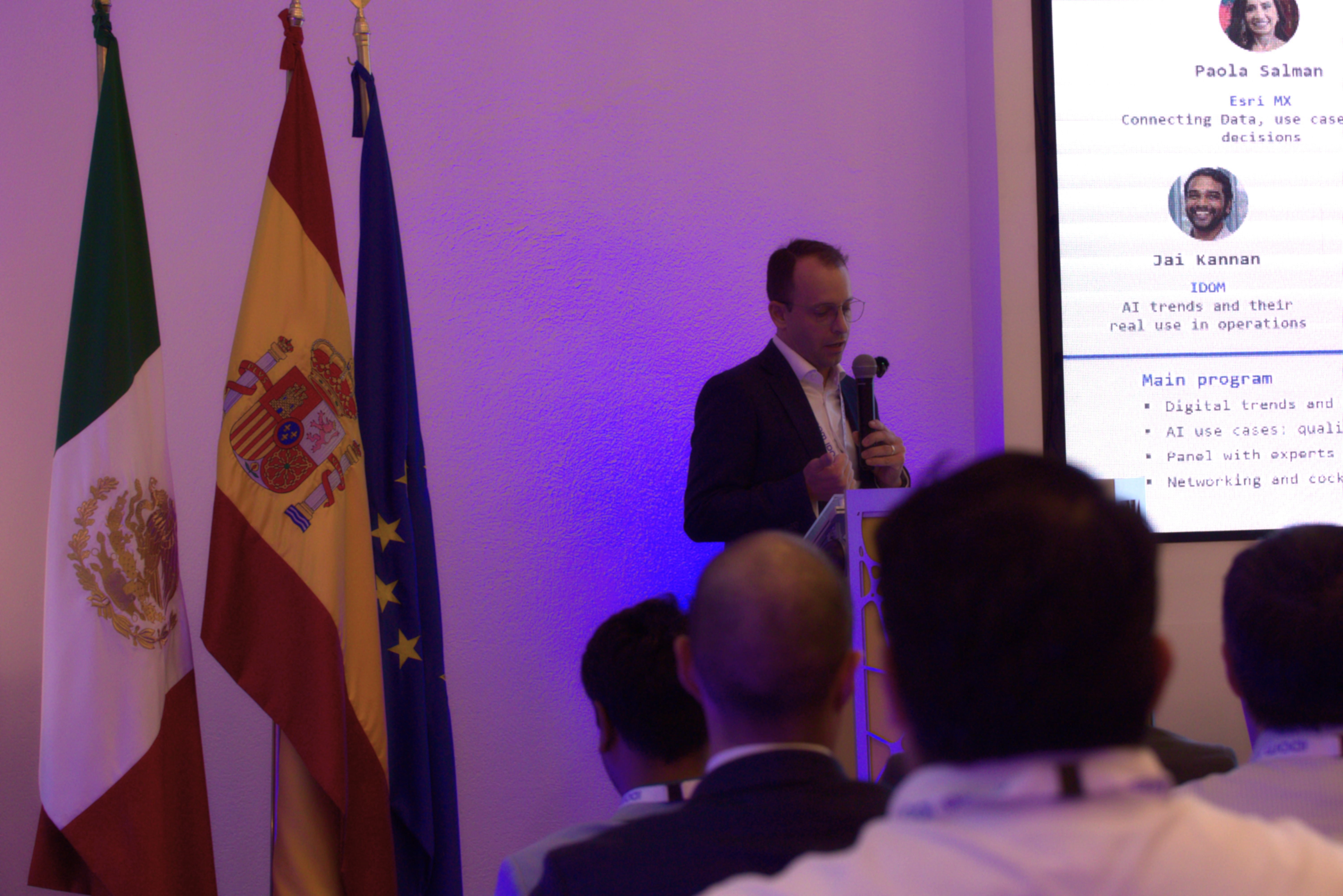
The event brought together professionals from the industrial and technology sectors who understood one key point: the challenge is no longer proving that AI generates value but knowing how to apply it in the right context. Jai Kannan, Ph.D. in artificial intelligence, emphasized that tangible results are now achievable in decision-making, productivity, and efficiency, provided there is reliable data, proper governance, and an operations-oriented approach.
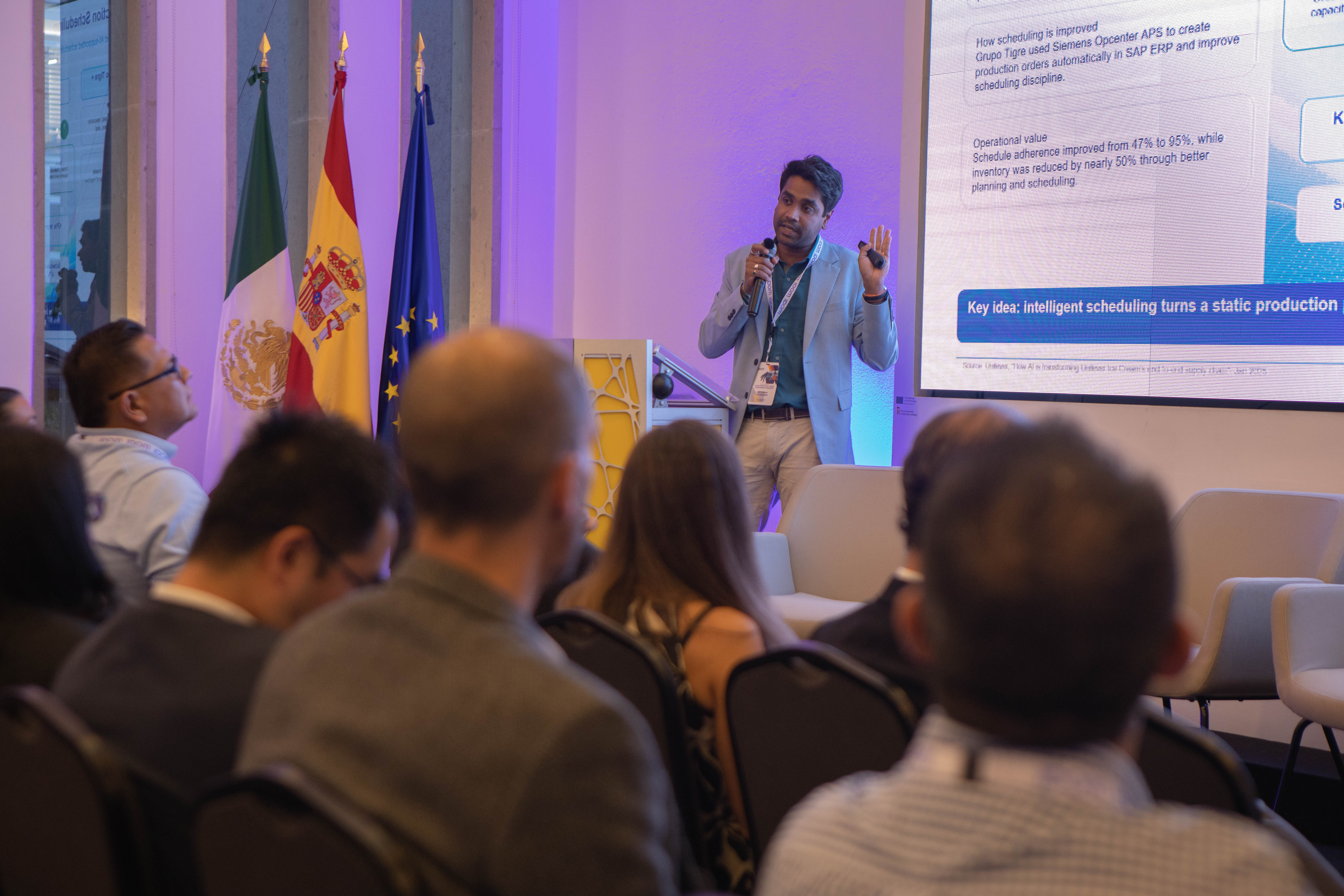
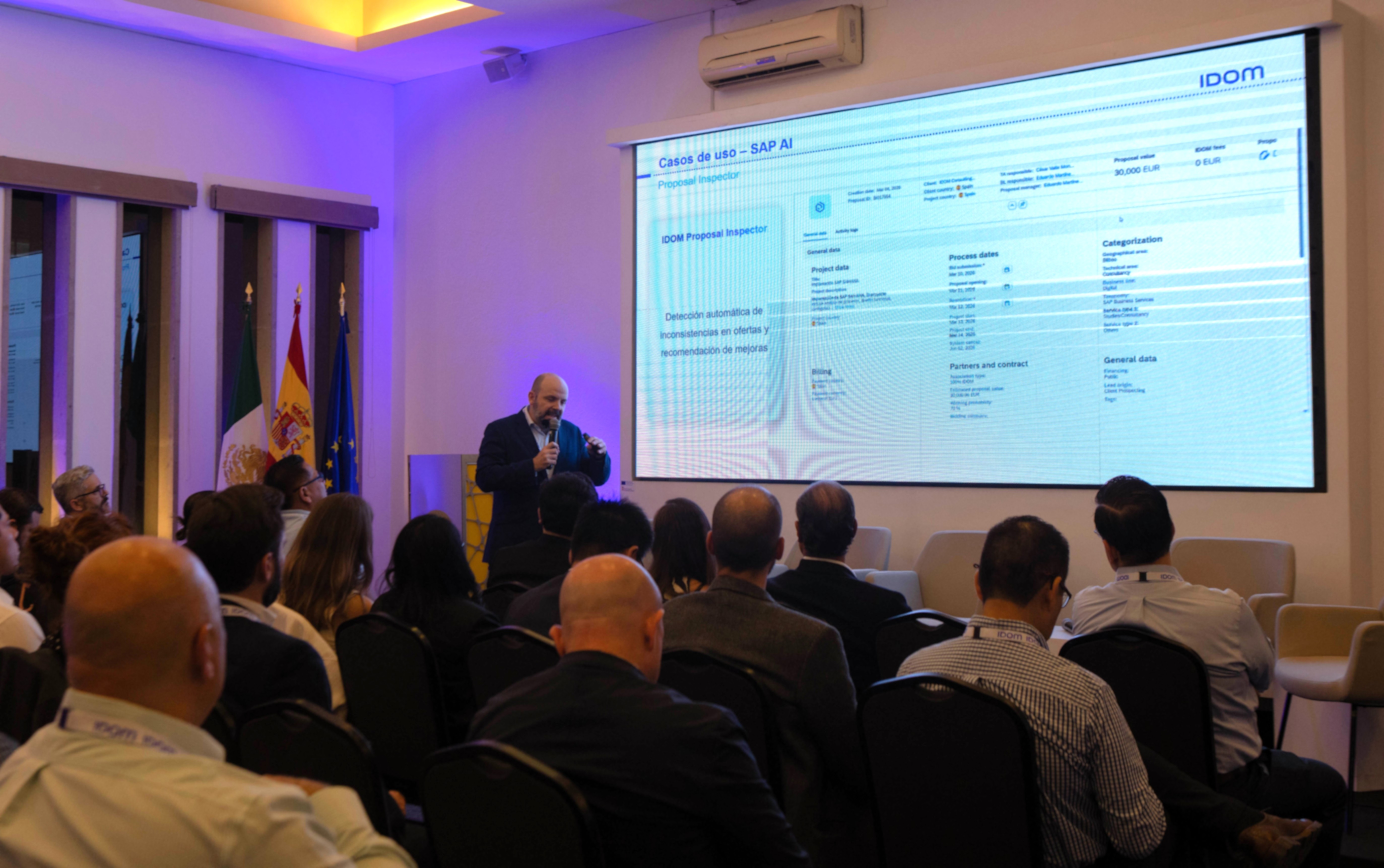
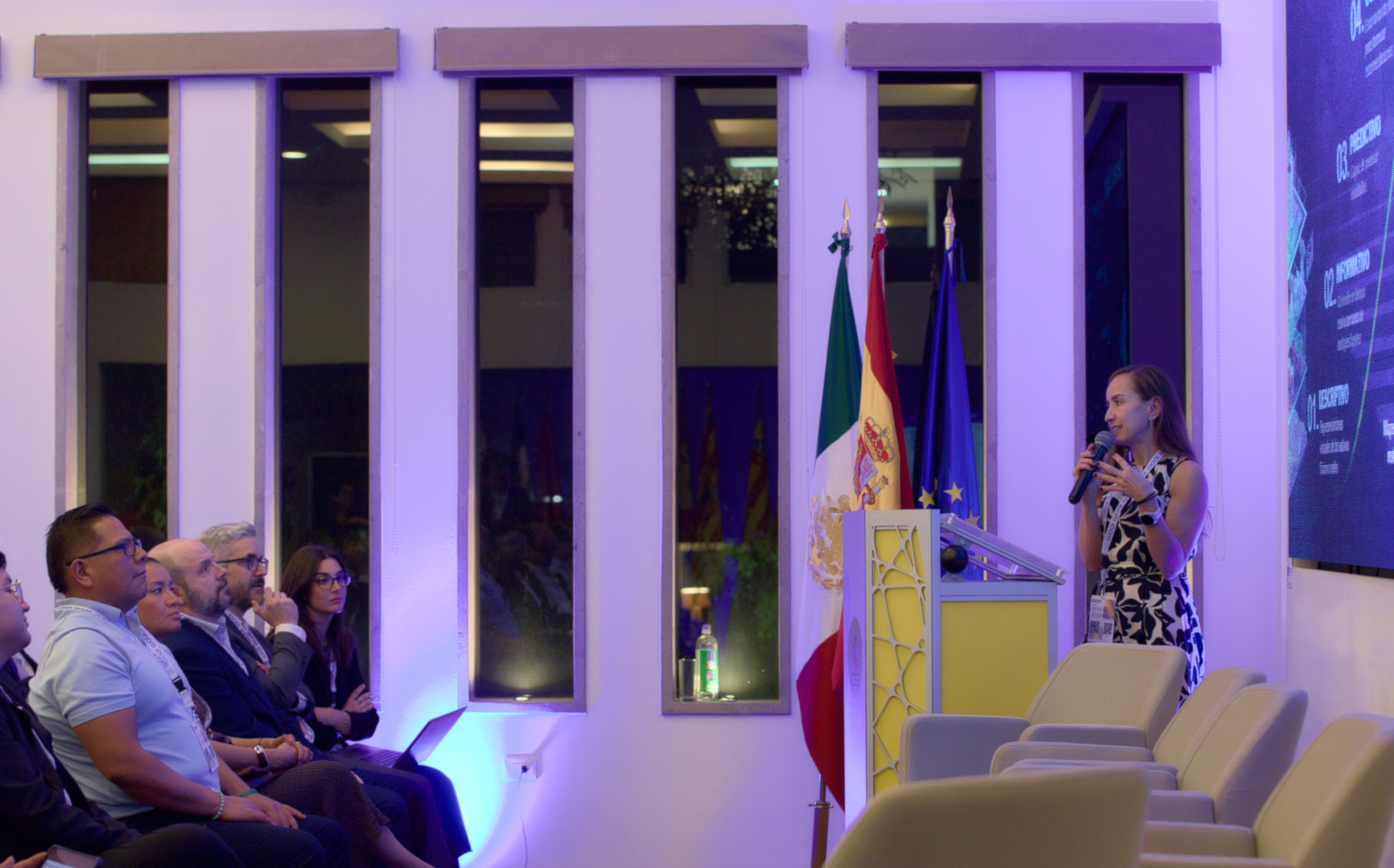
Throughout the day, IDOM experts Bernardo Rueda, Pablo Santos, Mónica Martí, and Paola Salman from Esri shared real-world examples demonstrating how AI is integrated across the entire value chain, from strategy to operations. They discussed applications such as demand forecasting, production planning, predictive maintenance, and inventory optimization, all of which are supported by a comprehensive data flow that enables the transition from analysis to action.
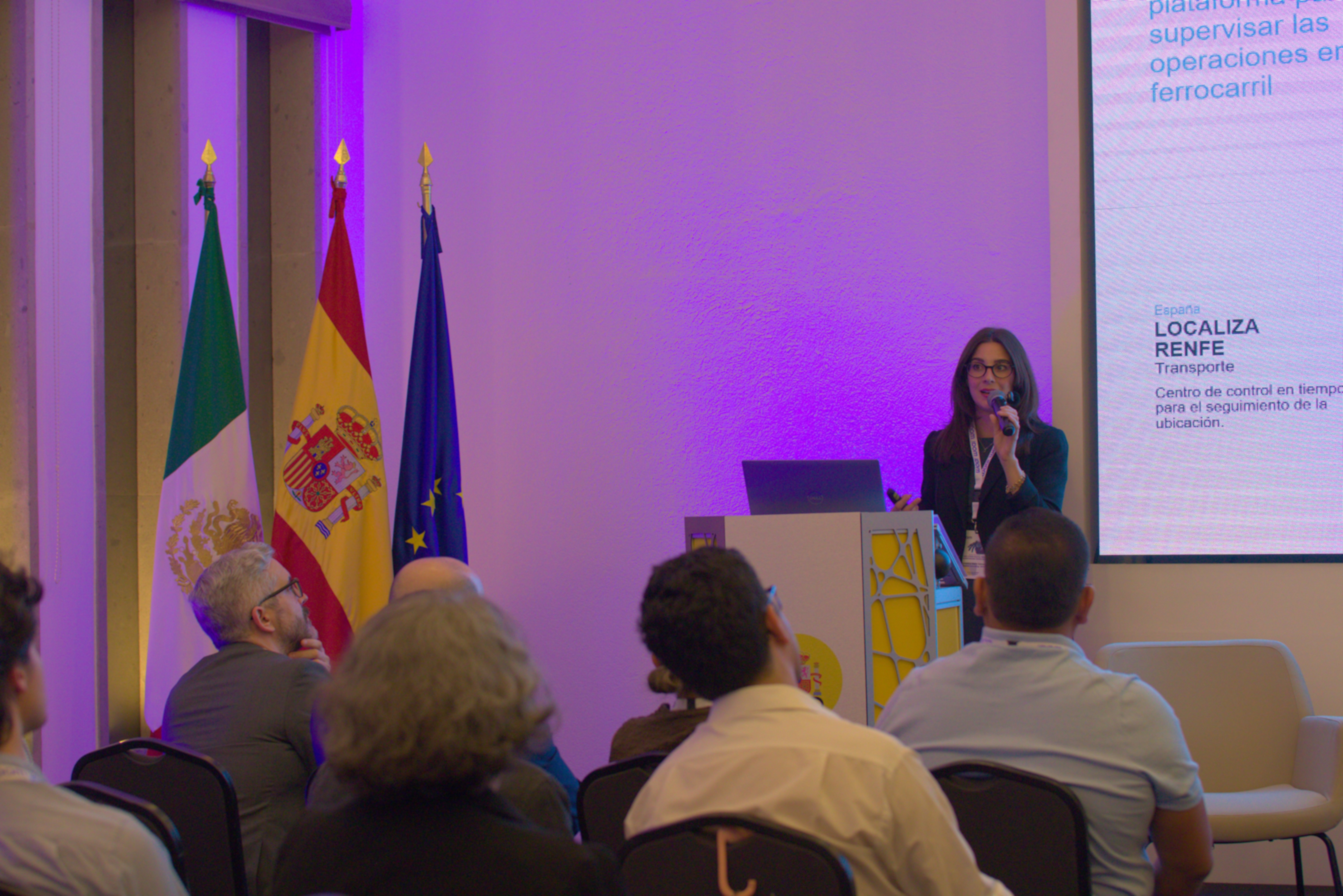
In the logistics sector, the focus was on the potential of AI to optimize routes and operations in real time by combining geospatial information with dynamic variables, such as traffic and weather. This approach shifts the focus from static planning models to adaptive systems that can continuously adjust operational decisions, directly impacting costs and service levels.
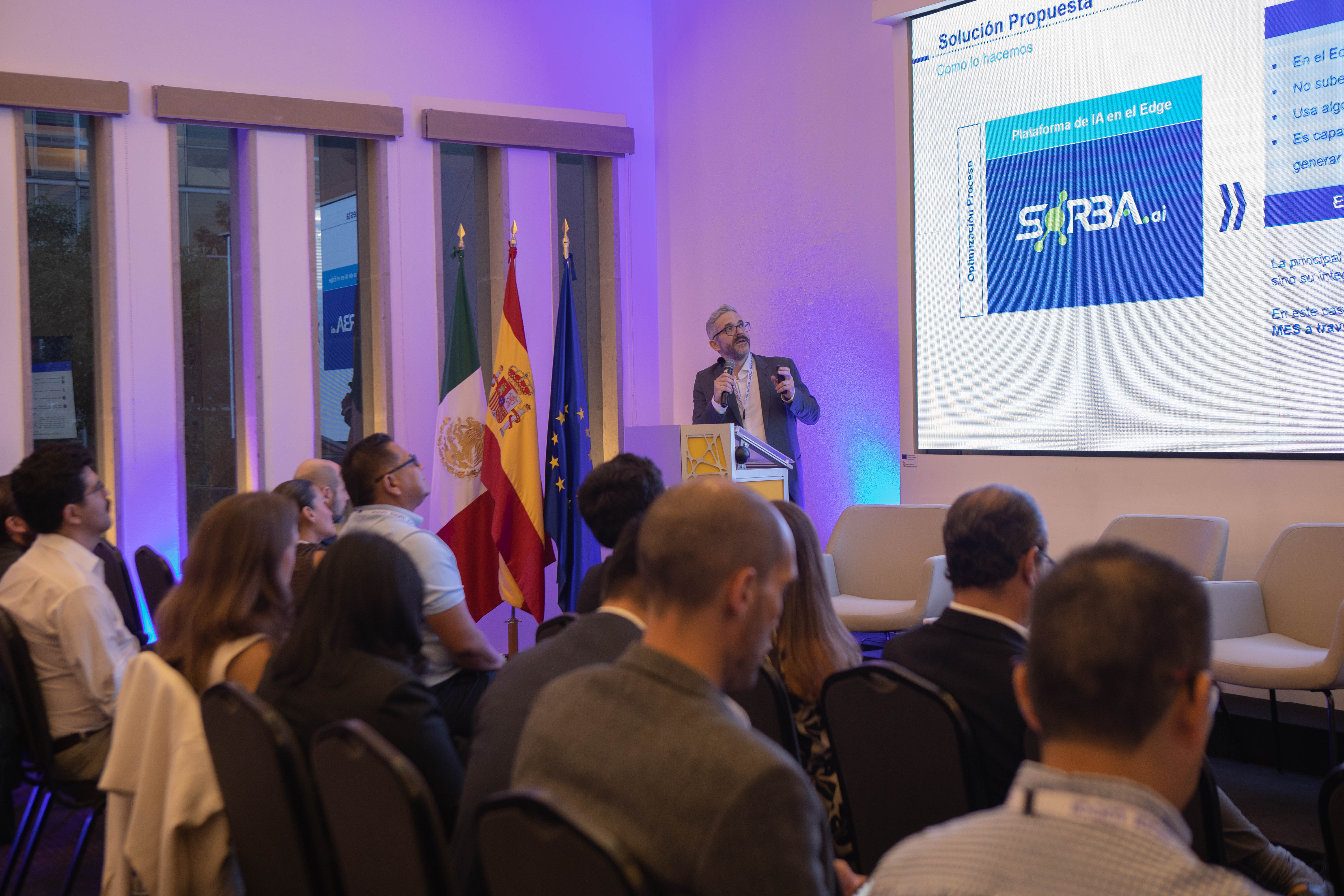
Beyond the theoretical approach, the event focused on solutions that have already been implemented. IDOM examples were presented, including the use of AI at the edge to detect defects in real time, integration with MES systems, and architectures like the Unified Namespace. Applications in SAP and Esri geospatial technologies were also presented to visualize operations and optimize logistics processes.
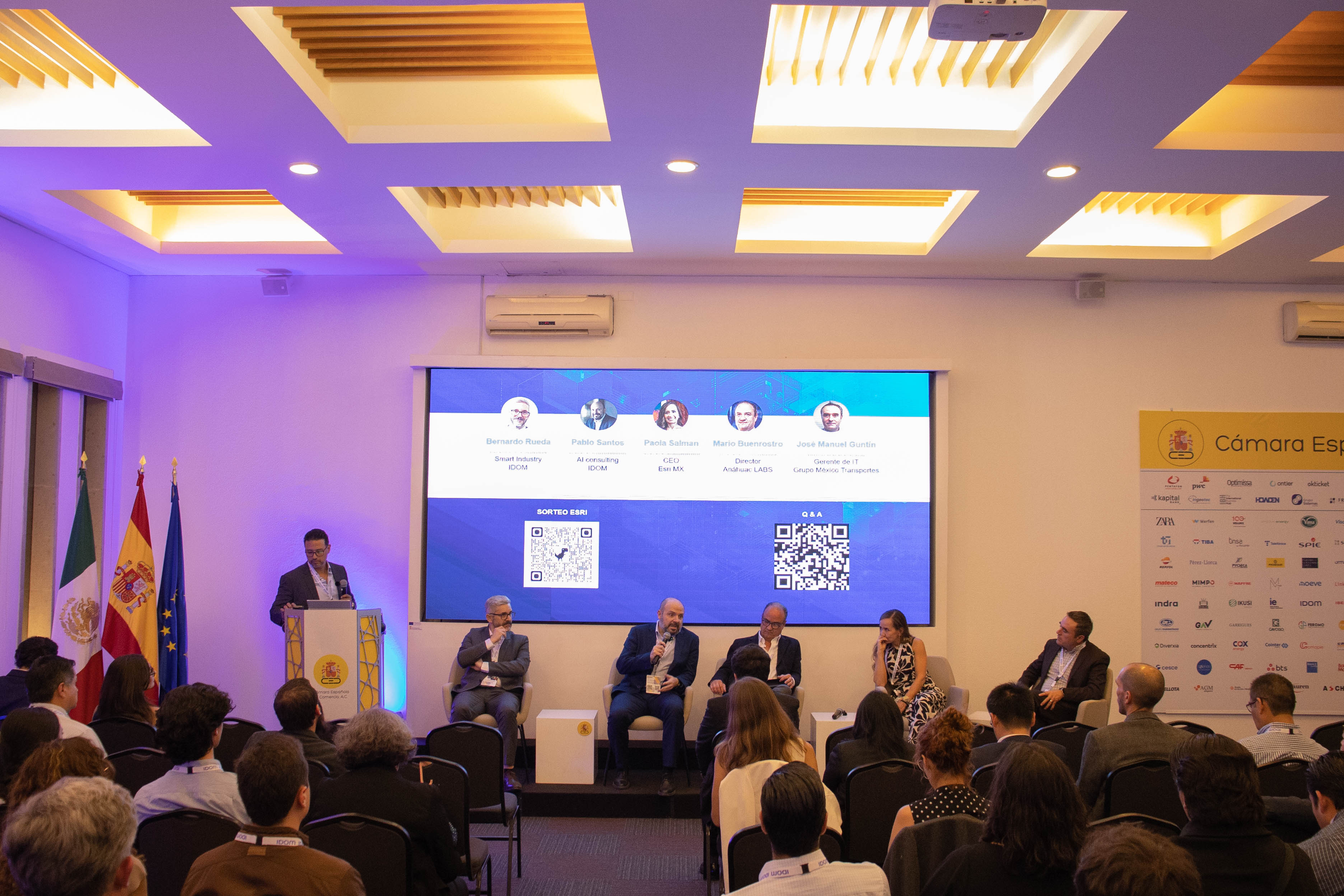
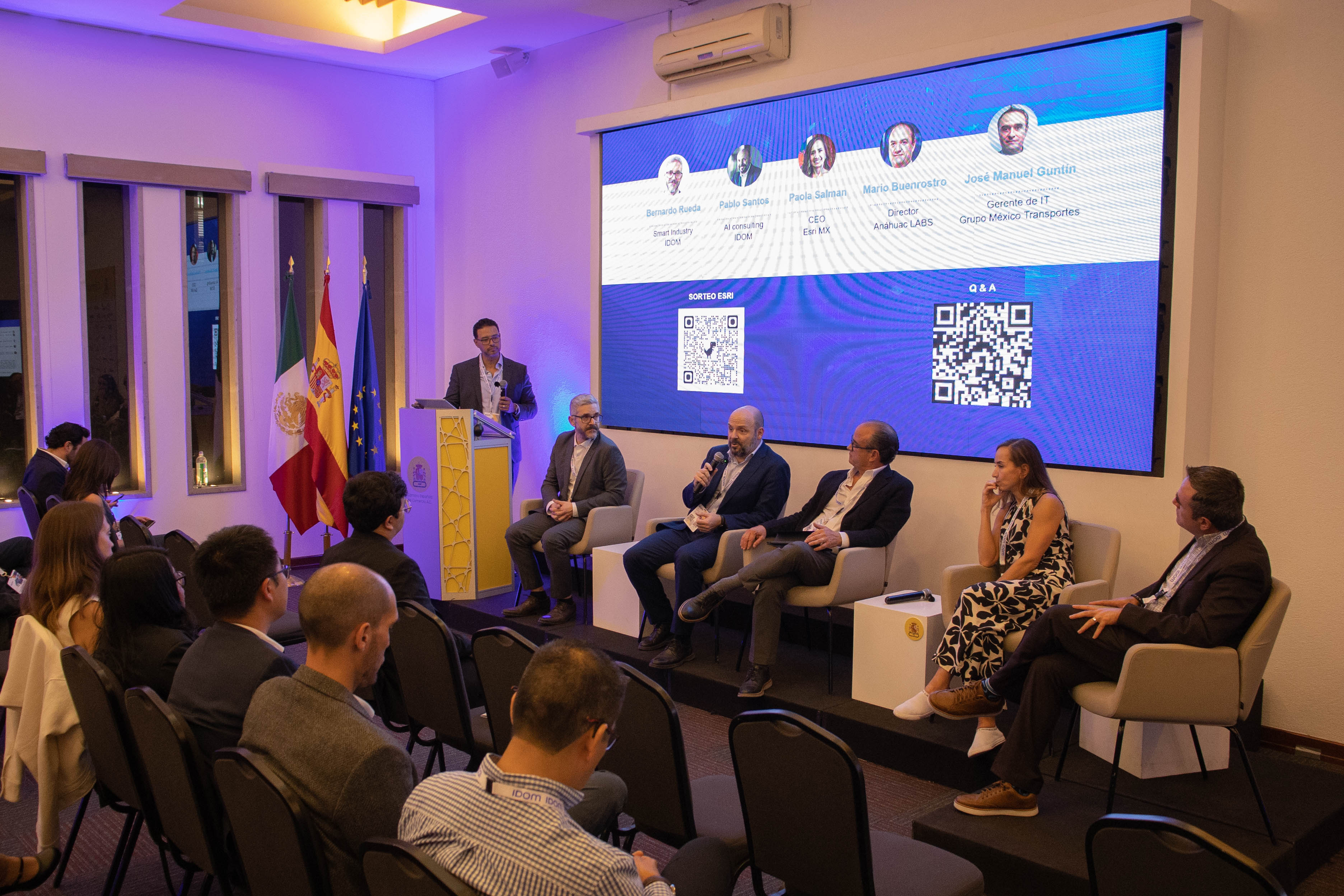
The discussion continued during a panel moderated by René Lara and featuring José Manuel Guntín (Grupo México Transportes) and Mario Buenrostro (Anáhuac Labs). The panelists addressed the main challenges and opportunities of adopting AI in the industry.
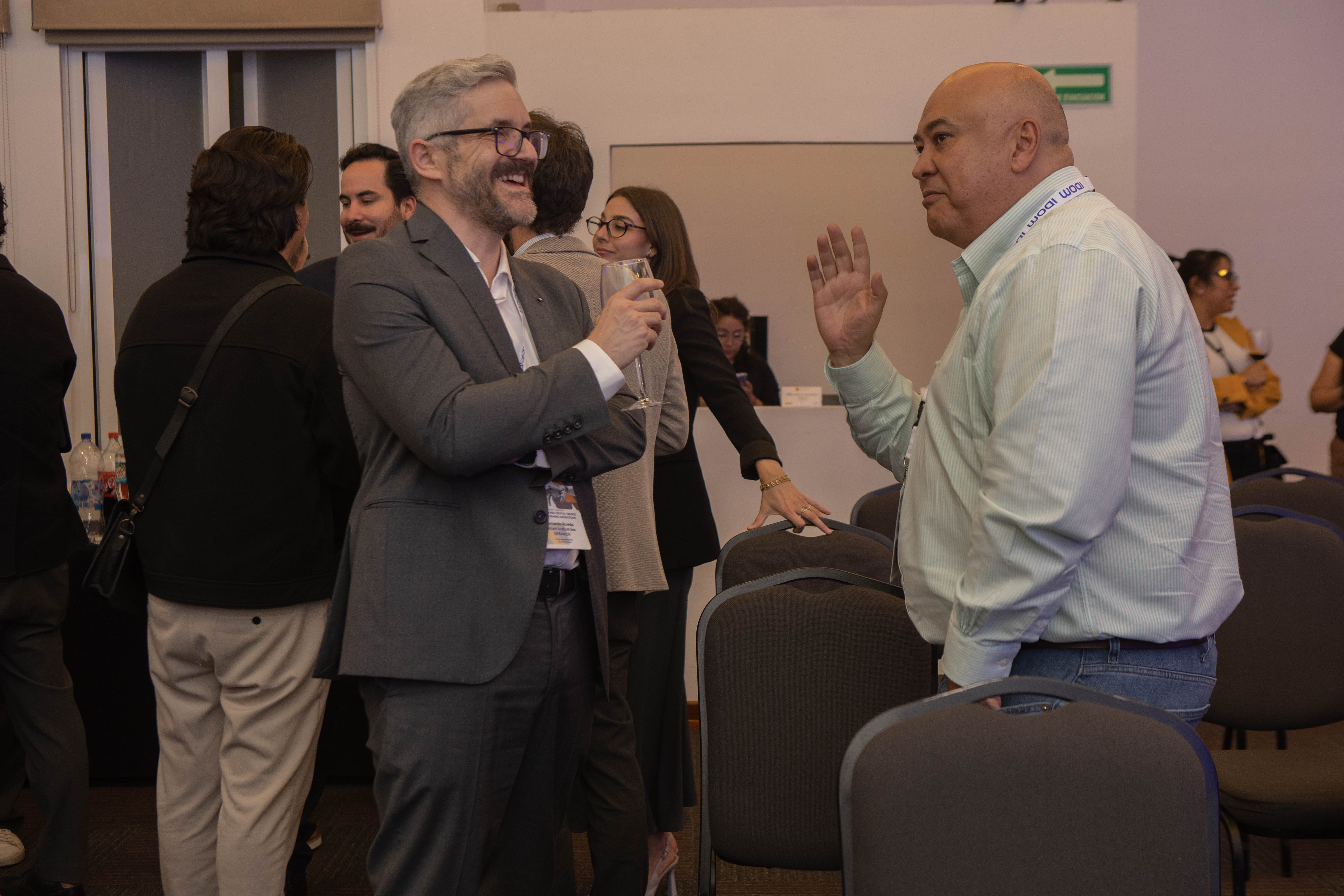
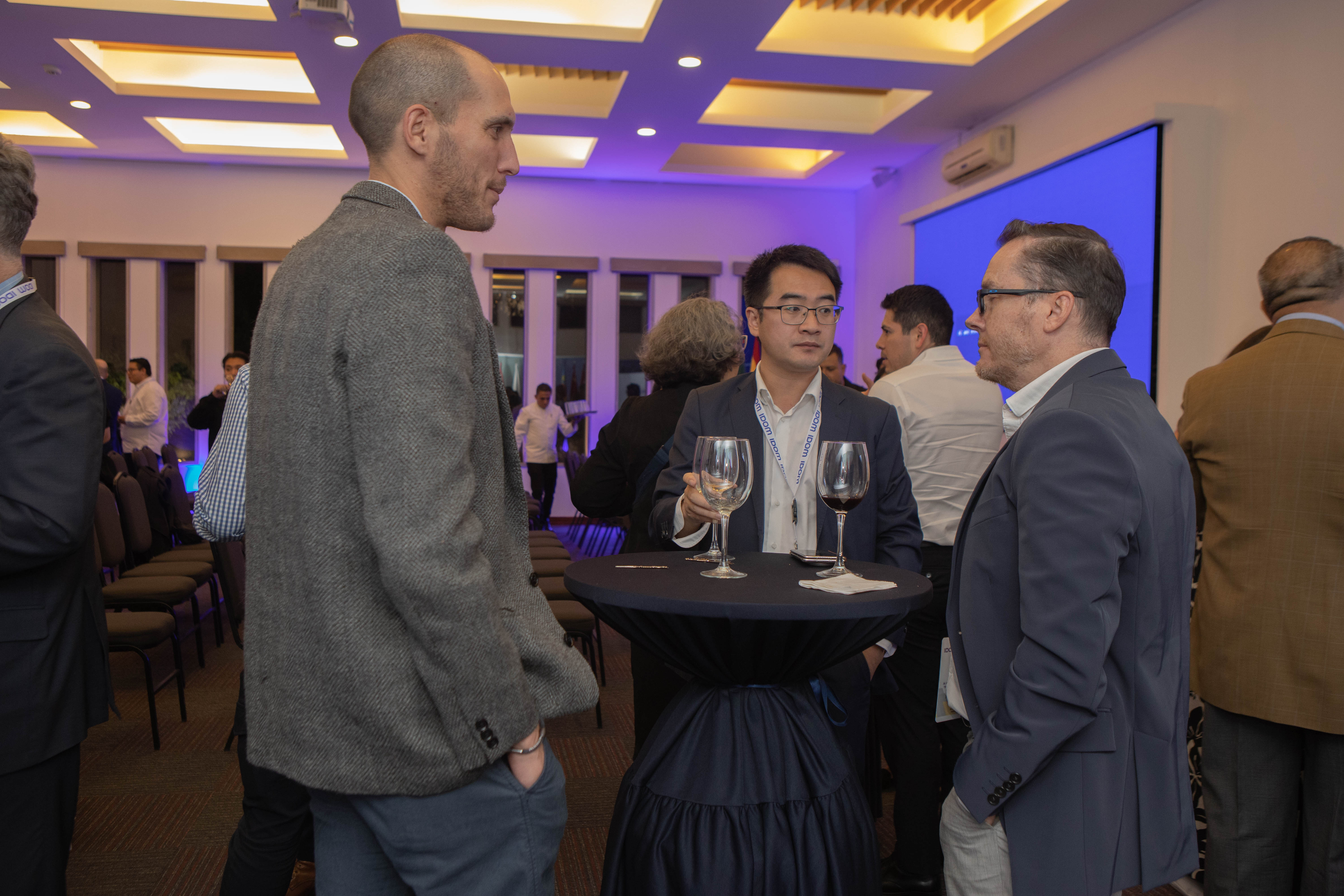
The event concluded with a networking session that provided an opportunity to share experiences and reflect on how to transition from the concept of artificial intelligence to its implementation in operations.