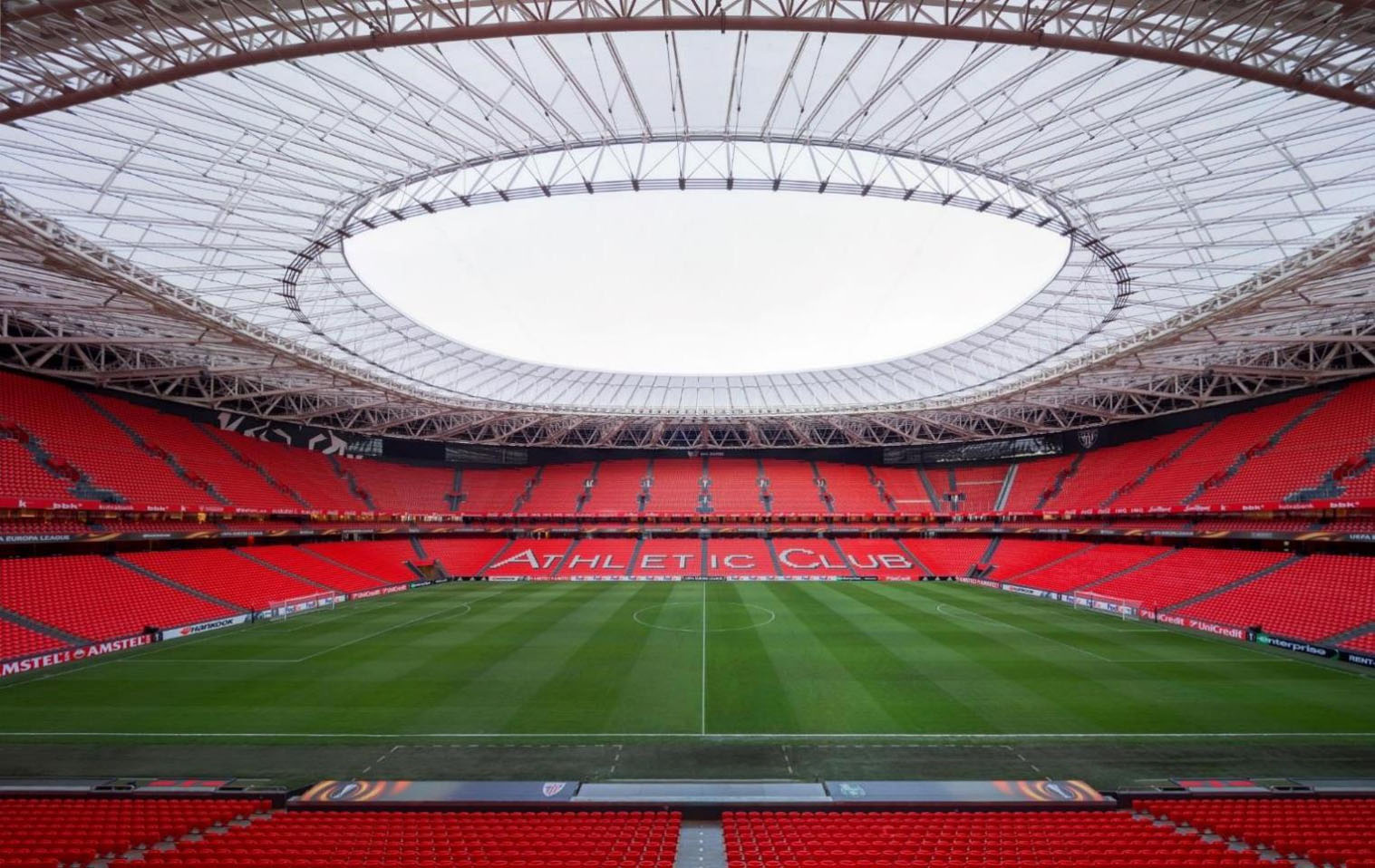


IDOM offers new criteria for designing more efficient roof cable systems that are more resistant to wind
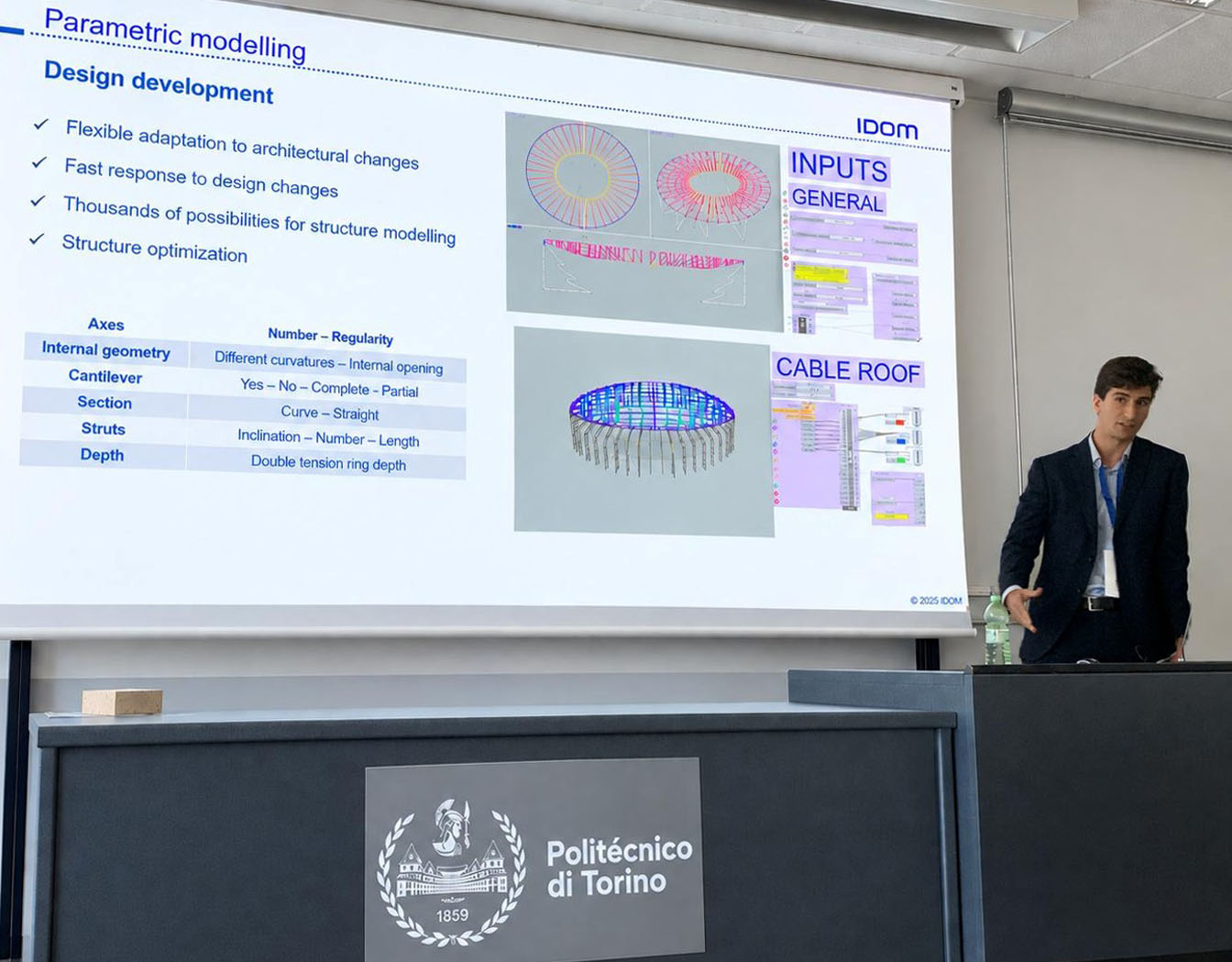
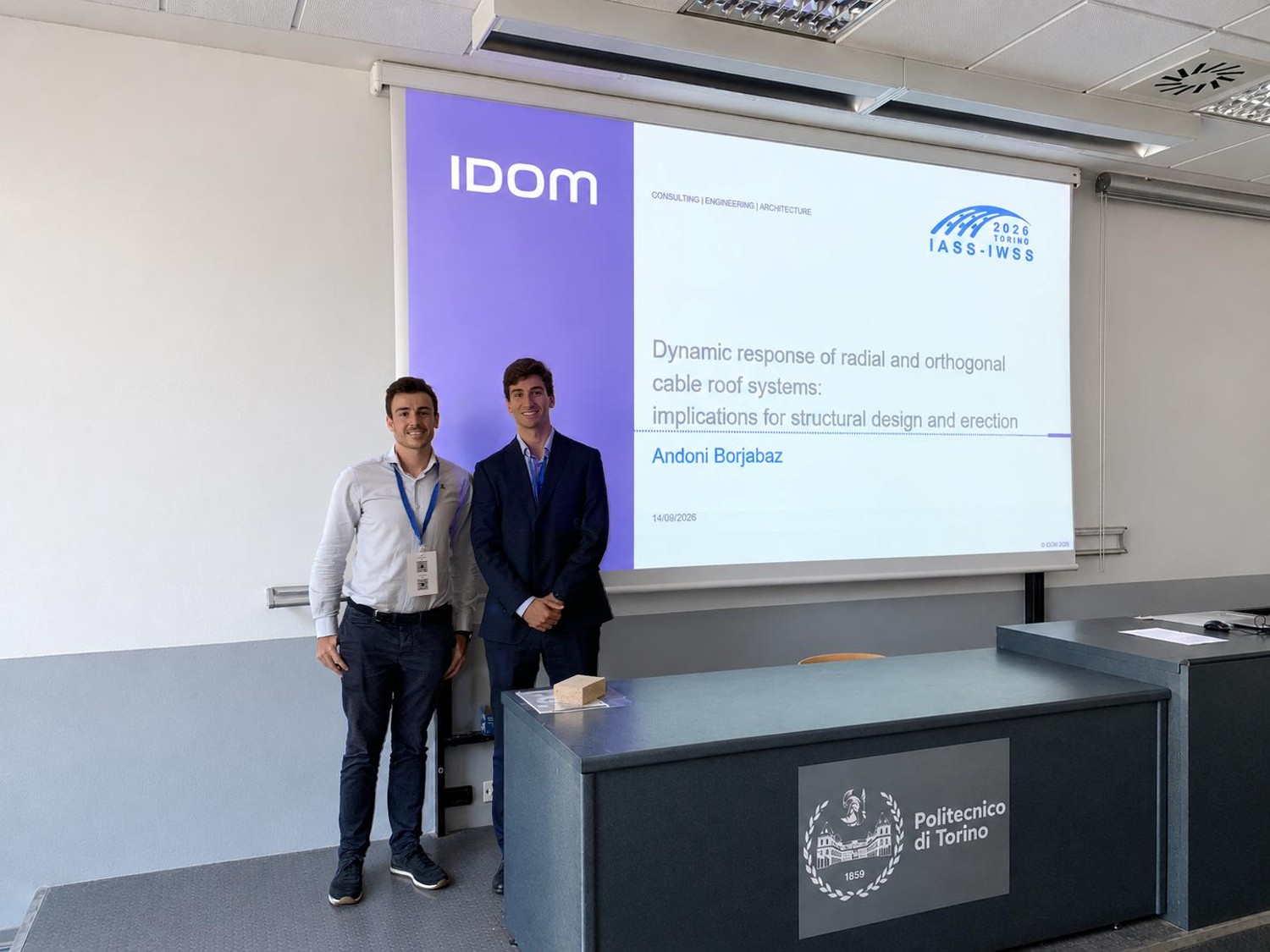
Andoni Borjabaz Fernández and Iñigo Hernández recently participated in the IASS-IWSS 2026 conference in Turin, Italy, from September 14 to 18. There, they presented a paper titled “Dynamic Response of Radial and Orthogonal Cable Roof Systems: Implications for Structural Design and Erection.”
The conference, organized by the International Association for Shell and Spatial Structures (IASS), is one of the leading international forums for professionals and researchers specializing in lightweight structures, spatial structures, and long-span roofs. This year’s edition was held in conjunction with the Italian Workshop on Shell and Spatial Structures (IWSS), bringing together experts from around the world to discuss the latest advances in structural design, sustainability, innovation, and new construction paradigms.
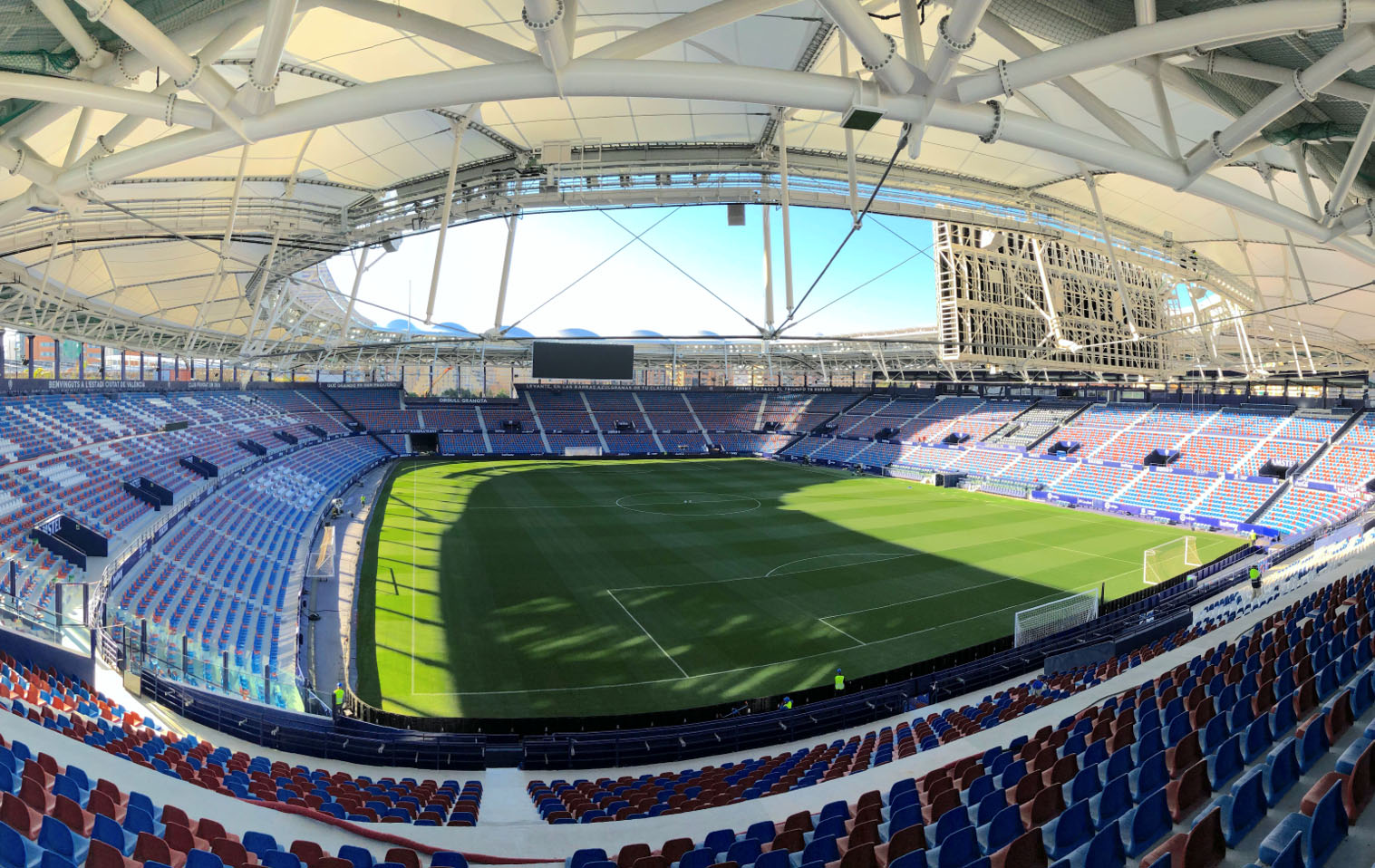
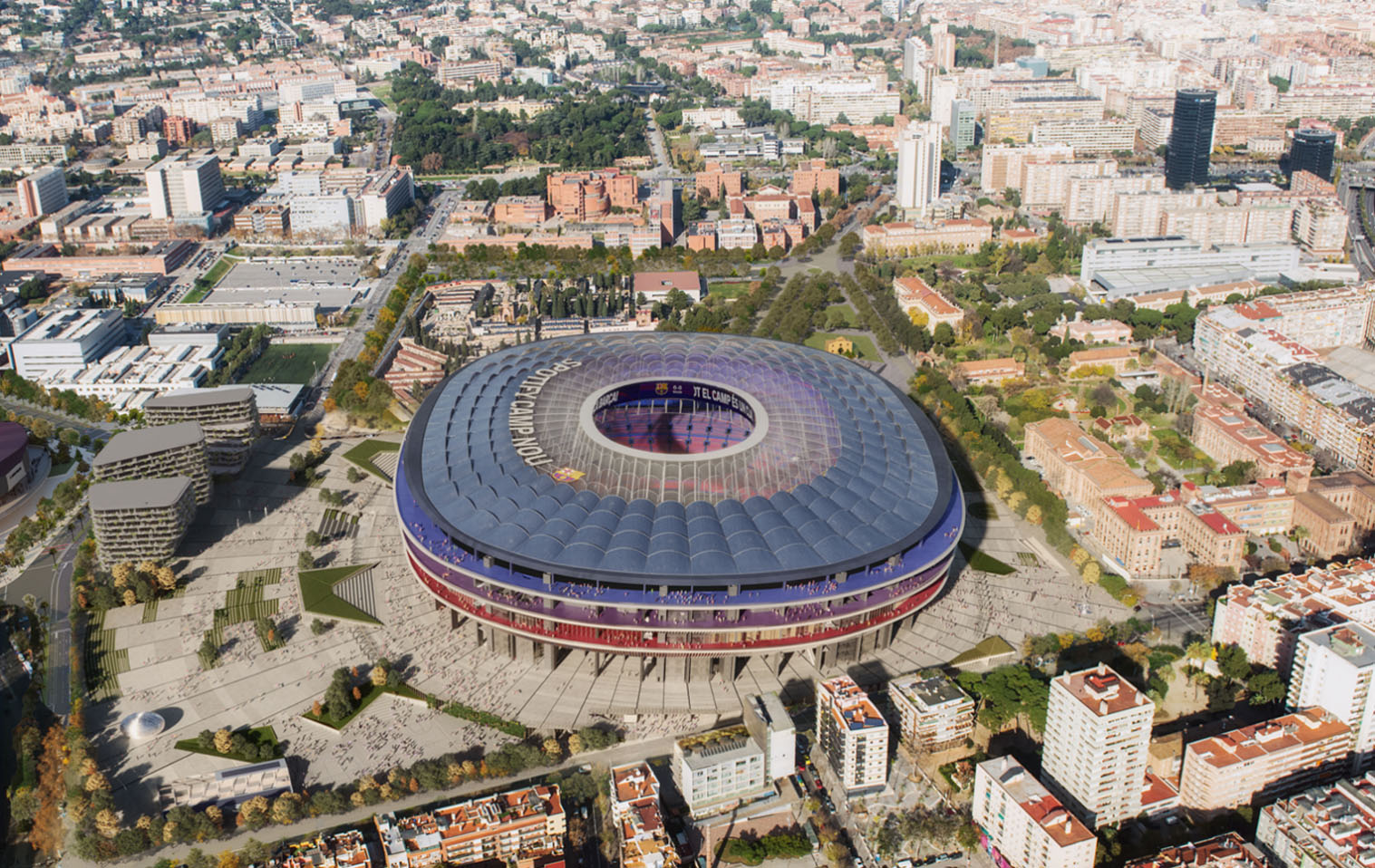
The IDOM paper addresses a significant aspect of cable-supported roof behavior: response to wind loads. These structures are widely used in large sports facilities, public spaces, and distinctive buildings due to their lightness and material efficiency. However, they also pose specific challenges due to their flexibility.
The research analyzes the phenomenon of dynamic amplification that can occur when a roof is overly flexible. In these situations, wind can generate vibrations that amplify the roof’s structural response, increasing the movements and stresses it must withstand. These effects directly influence both the structural design and the assembly and construction phases.
This study compares the dynamic response of cable-supported roofs with radial and orthogonal configurations, analyzing how the differences between the two types influence their behavior under wind loads. The purpose is to determine which of the two configurations is more susceptible to dynamic amplification.
The main focus of the work is the comparative evaluation of both types and the identification of their differing susceptibility to dynamic amplification. The results provide useful criteria for anticipating this behavior in the design and evaluation of cable-supported roofs.
IDOM’s participation in this international forum has enabled the firm to share these results with leading industry specialists, exchange experiences with researchers from different countries, and contribute to advancing knowledge in a highly relevant field for developing lightweight, long-span structures.