

Key tools for the future of the O’Higgins metropolitan area
IDOM presented the Metropolitan Plan and the Governance Model for the O’Higgins Metropolitan Area (AMO’H) at the offices of the O’Higgins Regional Government in Chile. The event brought together more than twenty officials and representatives from municipalities, the regional government, and the national government. It marked the culmination of a process aimed at building a shared vision for metropolitan development and strengthening coordination among the various stakeholders involved in land management.
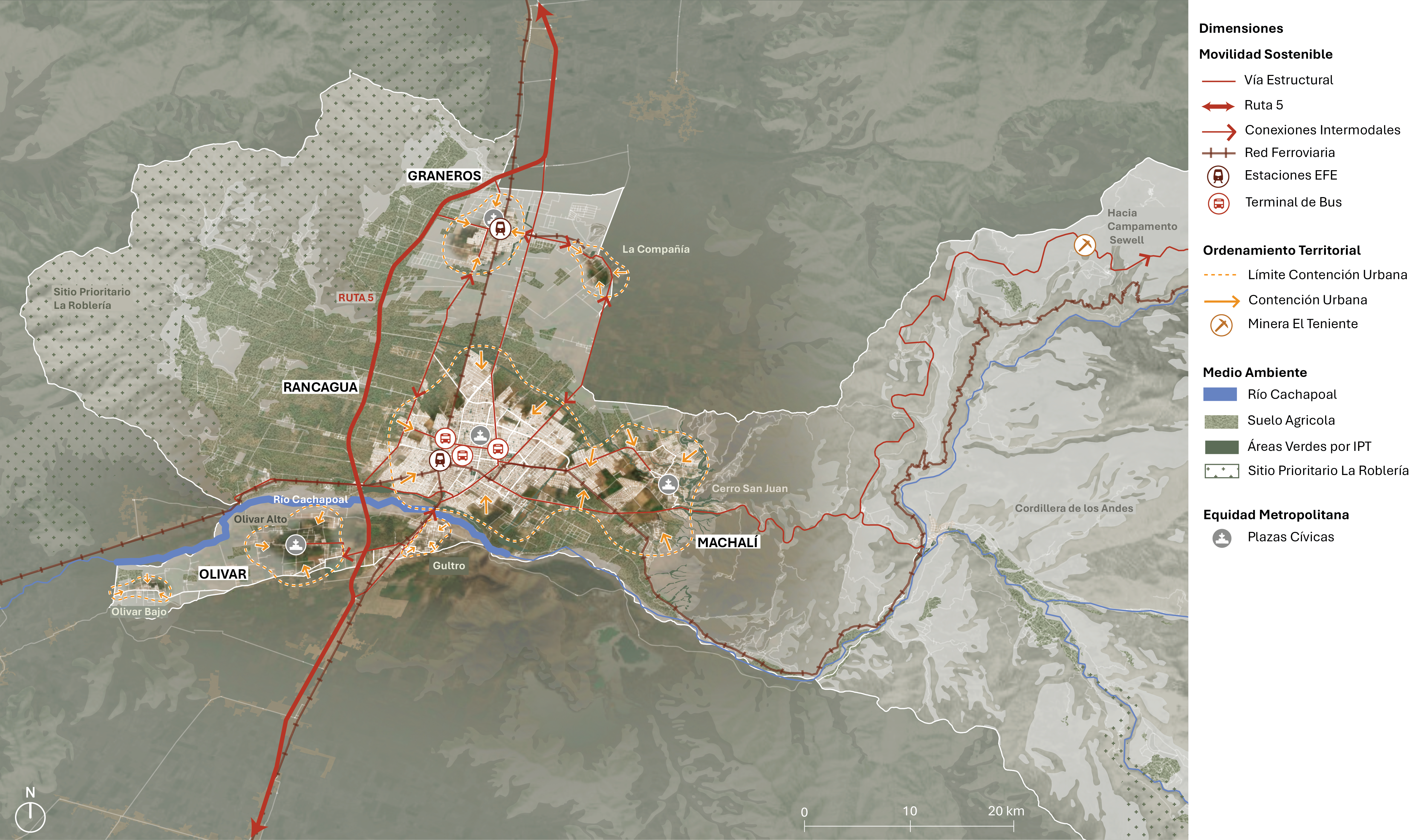
The AMO’H consists of the municipalities of Rancagua, Machalí, Graneros, and Olivar, which are growing increasingly interdependent in areas such as mobility, access to services, urban development, and economic activity. Together, these municipalities account for 37.3% of the regional population and constitute one of the region’s main urban and economic systems. They play a strategic role in coordinating territorial development in Chile’s central macrozone. However, this dynamic also poses significant challenges for managing and planning the metropolitan area. The main challenges identified include population, service, and infrastructure concentration around the Rancagua-Machalí conurbation, urban expansion into peri-urban and rural areas, mobility and connectivity gaps, and growing environmental pressures.
To address these challenges, the Metropolitan Plan developed by IDOM establishes a roadmap structured around four strategic areas: mobility and transportation, land use planning, the environment, and metropolitan equity. The plan links territorial assessments to development strategies and a portfolio of metropolitan initiatives. These initiatives aim to consolidate a more polycentric, integrated, and sustainable model. They also strengthen the centralities of the four municipalities. Additionally, they promote a more balanced distribution of opportunities. This contributes to greater territorial cohesion and a better quality of life for residents.
At the same time, the Governance Model establishes a permanent coordination structure to strengthen joint decision-making and integrated management of the metropolitan territory. The proposal articulates political, strategic, technical, operational, consultative, and participatory levels, combining the governance bodies provided by Law No. 21,074 with new spaces for coordination, dialogue, and participation.
With the adoption of these instruments, the AMO’H now has a roadmap to address challenges that transcend municipal boundaries and require coordinated responses at the metropolitan level. This milestone marks the beginning of a new phase aimed at transforming the shared vision developed for the region into concrete projects, investments, and actions. This will strengthen institutional coordination and promote more integrated, sustainable, and competitive development for the O’Higgins Metropolitan Area.