


What are Digital Product Passports (DPP) and how will they transform the construction industry?
February 28, 2024
John Rincón Moreno
Climate Change Mitigation Expert | Linkedin
Impact of building and construction on resource use
The building and construction industry is one of the main drivers of the global economy and society. It accounts for over 10% of global GDP, and 100 million jobs depend solely on construction [1]. However, construction is also one of the world’s largest consumers of resources.
It is estimated to account for approximately 60% of total resource use and at least 35% of energy consumption and greenhouse gas (GHG) emissions [2]. Furthermore, according to the European Commission (2011) [3], the sector uses 50% of extracted materials, 30% of water, and generates 33% of waste. Recent studies confirm that urban construction and maintenance account for 40% of all materials, 33% of energy, and 50% of waste emissions [4].

Change of focus: shift from operations to materials and installation
 Traditionally, attention has focused on energy consumption during the operation of buildings. Today, the focus is shifting to the manufacture of materials and the installation phase [5]; especially given the forecast that the global building stock will double by 2050, which will also mean doubling the consumption of materials.
Therefore, this scenario requires careful and sustainable selection of materials and resources used in buildings to achieve greater economic benefits, generate positive social impacts, and minimize environmental destruction.
In recent years, reusing materials has become an essential strategy for reducing the environmental impact of extracting and manufacturing raw materials. These processes are primarily responsible for a material’s environmental impact throughout its life cycle. Therefore, selecting structural materials is crucial because it is a relatively irrevocable decision (e.g., structural components) that may be impossible to alter once construction is complete. [6].
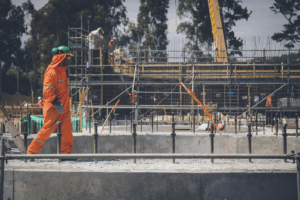 However, despite the growing importance of material reuse across the industry, its implementation is limited by factors such as the following:
- Uncertainty associated with the reuse of materials whose specifications are unknown
- Warranties are not provided for used or refurbished construction products.
- Lack of specific information on the environmental impacts of each material in its actual context. Decisions are made based on assumptions rather than verified data because generic data from international databases (not adapted to the project or supplier) is used..
Product Passports: sustainability, traceability, and circularity
Additionally, Product Passports address a major challenge facing the sector—the lack of accurate, consistent information on resources, products, and processes. Acting as track-and-trace tools, they provide unique, aggregated data that facilitates life cycle assessments and informed decision-making. Essentially, they support circular business models by documenting essential information about materials and components for future reuse.
 This system must improve transparency and traceability, optimize the management of complex information, and reduce administrative burdens through digital processes to be effective.
Digitization takes this concept one step further. Digital Product Passports (DPPs) collect and share detailed information about each product and its supply chain throughout the entire value chain. This improves understanding of the materials used and their environmental impact.
In the case of construction, the PDP must include information that facilitates:
- Informed decisions for users and authorities.
- Market surveillance and regulatory control.
- Promotion of the circular economy, with data on reuse and recycling. .
European regulations and PDP roadmap (CPR 2024)
Currently, there is no standardized framework that defines the content, format, or creation process of these passports. However, their development aligns with other European regulations that incorporate traceability, chain of custody, and data exchange requirements. The PDP initiative supports broader EU objectives, including the Ecodesign Regulation for Sustainable Products (ESPR).
Ultimately, the PDP seeks to:
- Create a one-stop shop for technical information.
- Simplify regulatory compliance.
- Enable a digitized and interoperable market across Europe.
The Digital Product Passport (DPP), which is provided for in the new Construction Products Regulation (CPR 2024), derives directly from the Ecodesign Regulation for Sustainable Products (ESPR). In other words, the DPP is the construction sector’s practical application of the ESPR’s conceptual framework, which consists of the following phases:
- January 7, 2025: Construction Products Regulation (CPR) enters into force.
- January 8, 2026: Start of application.
- 18 months after the Delegated Act: Manufacturers must submit EPDs.
- 2029-2032: Full implementation for harmonized standards.

Manufacturers must provide:
- Declarations of performance and conformity.
- Safety instructions.
- Certificates and unique identifiers for products, operators, and facilities.
All information will be securely stored in the ESPR registry and accessible via a web portal. Transforming the construction sector into a circular, digital, and responsible model is essential to addressing the environmental and regulatory challenges ahead. This transition requires compliance with new regulations and adoption of practices that generate economic, social, and environmental value. én adoptar prácticas que generen valor económico, social y ambiental.
Although digital product passports (DPPs) are still under development, they will be key to improving traceability and reducing environmental impacts in the future. At IDOM, we are committed to supporting companies and organizations every step of the way, from gathering and structuring the necessary information to calculating and analyzing environmental impacts and designing strategies that facilitate the creation of passports aligned with European requirements. At IDOM, we believe that the future of construction is built with materials, intelligent information, and responsible decisions.