

Preliminary Design Engineering Design Services for Metrolink
Ireland
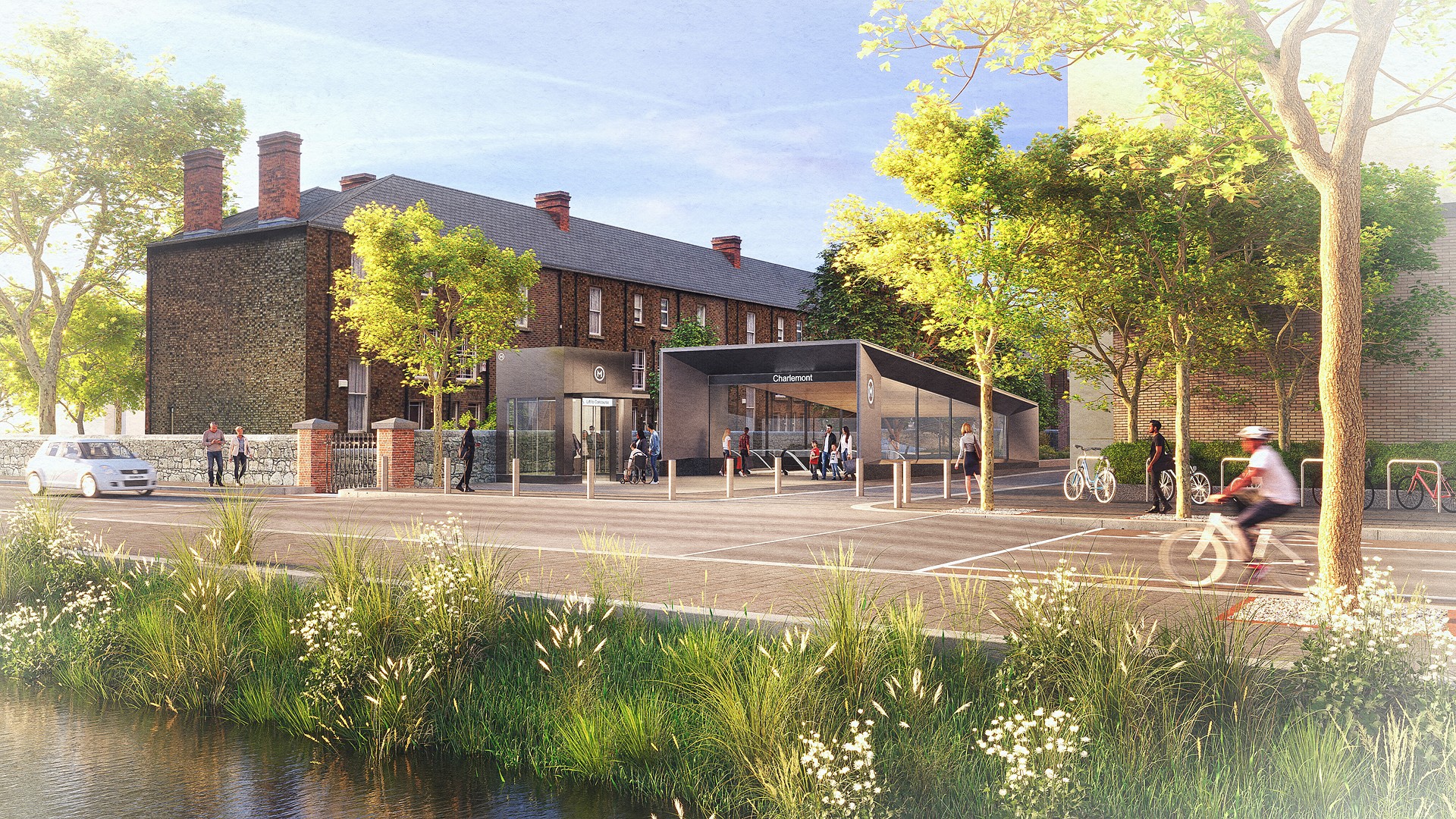
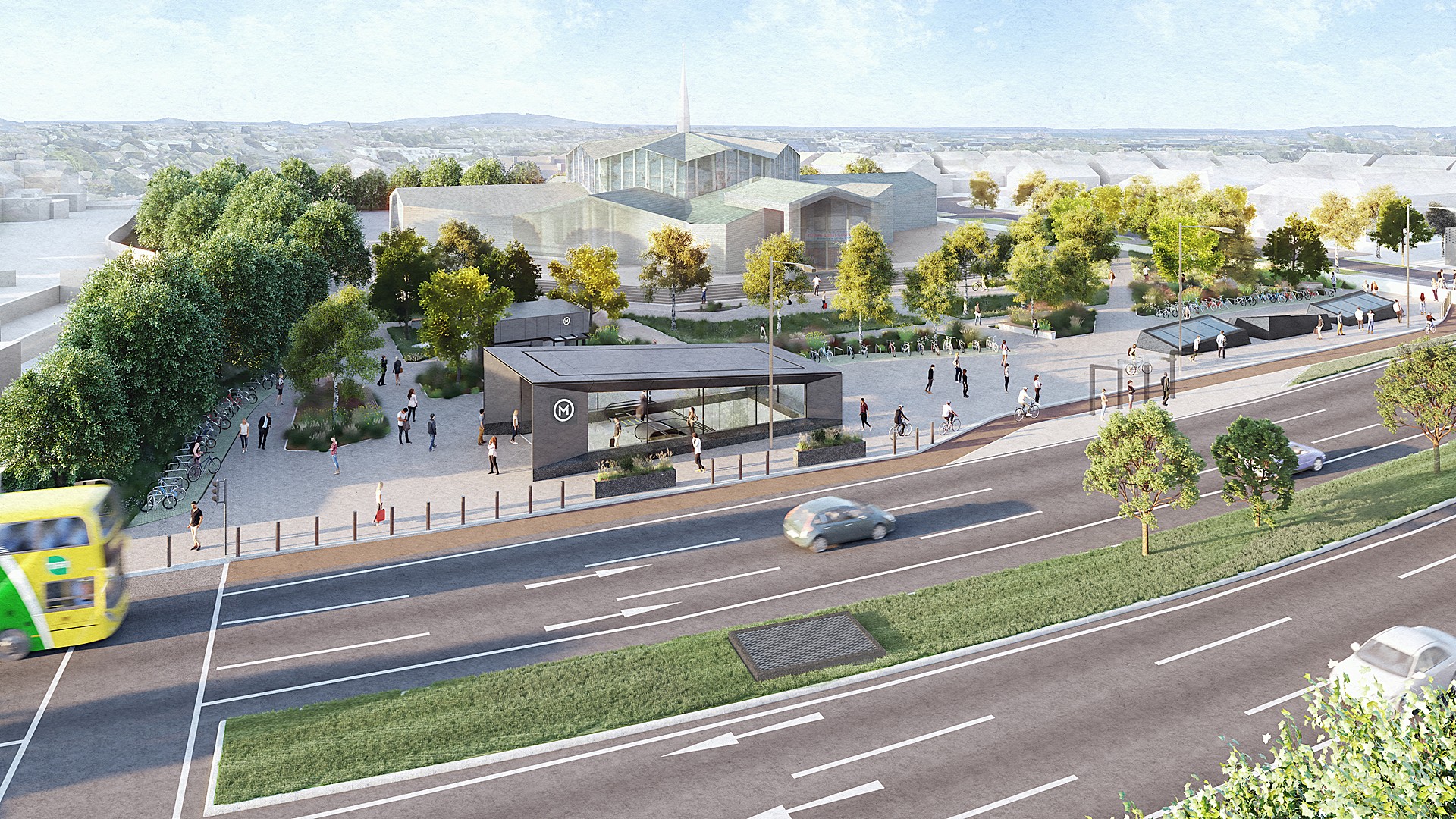
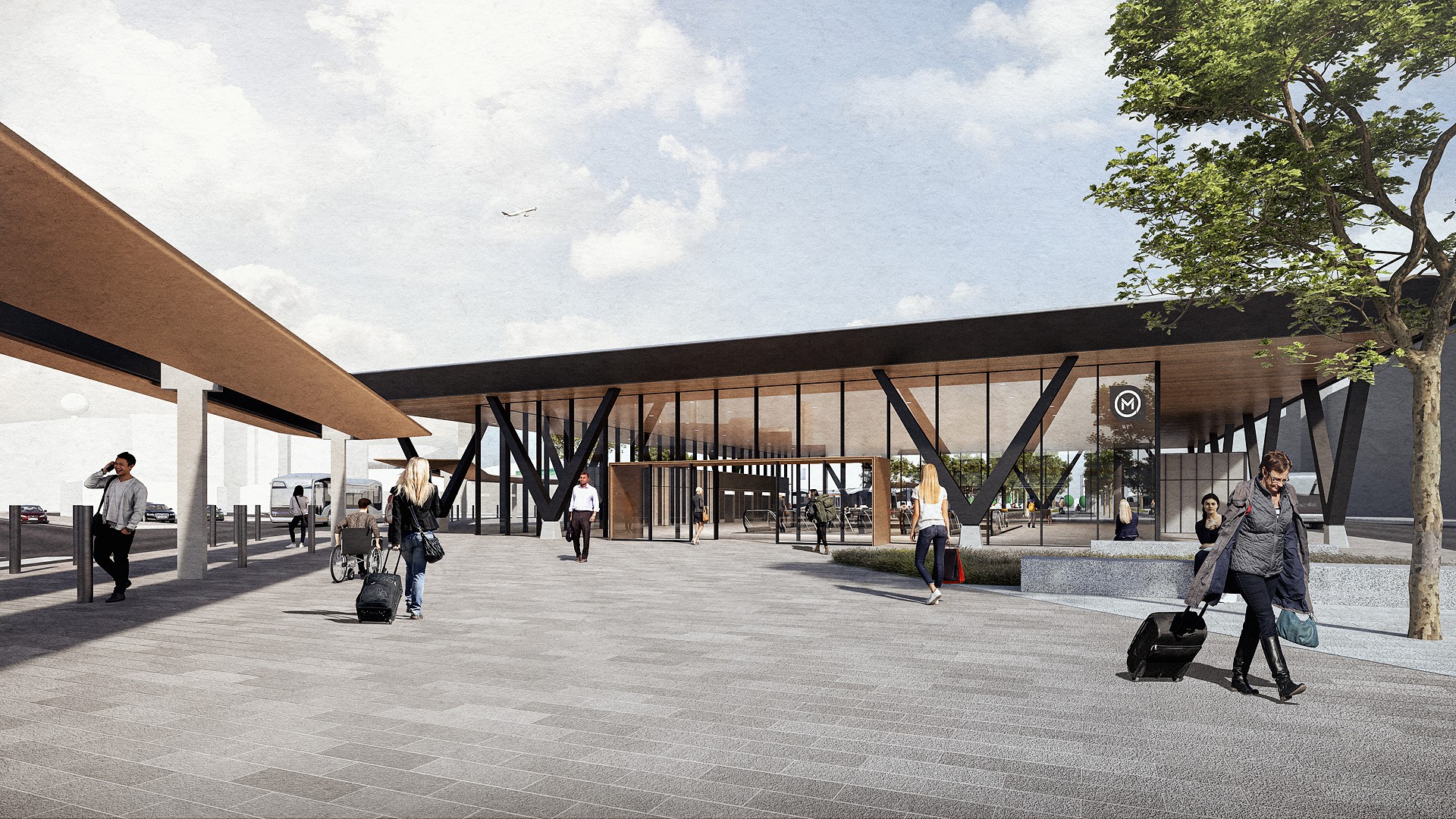
MetroLink consists of approximately 18.8 km new metro line, consisting in 6.1 km at grade and 12,7 km that runs in a tunnel section (TBM). This line links Estuary (north of Swords) to Charlemont located south of Dublin City Centre. The line will also pass through Dublin Airport and will interchange with other important public transport infrastructure in Dublin.
The main characteristics are as follows:
- High capacity and high frequency rail line, running from Swords (North of the city of Dublin) to Charlemont (centre of Dublin), linking the Dublin Airport, Irish Rail, DART, Dublin Bus and Luas Services, creating a fully integrated public transport in the Greater Dublin area.
- Use of High Floor Unattended Automatic Trains with a grade of Automation GoA4, capable of operating at headways of 90 seconds in peak hour, required for the forecasted 20,000 Passengers Per Hour Per Direction.
- 16 stations: 11u. underground (designed in a cut and cover configuration, reaching in some cases more than 30 m depth), 4u. open air / retained wall and 1 at-grade surface level station.
- A single bore twin track tunnel configuration, bored with a TBM.
- 12.7 km of a 9.2m diameter single bore twin track tunnel configuration, bored with a TBM, with an estimated maximum applied front pressure of 2.9 bar. Two portals and a station are used to launch and retrieve the TBM.
- Structures in cut and cover (from 6,30 m to 17 m depth between ground and rail level), retained-cut (until 15m depth between ground and rail level) and open cut. Also, an intervention evacuation shaft structure of environ 32 m depth.
- Interpretation of heterogeneous geological formations, geotechnical analysis applied to tunnels (calculation using the 3d analysis method and loss of soil method), analysis and seismic risk analysis.
- Design of a Depot to accommodate a fleet of 59 trains, with maintenance and washing area.
- Other significant works including a multi-storey park and ride building, viaducts and bridge structures, as well as associated power and systems, control and communications and rolling stock.
- Definition of the main criteria for the implementation of Metrolink’s Operational Control Center (OCC) as well as the Backup Operation Control Center (BOCC).
- Description of the different requirements (functional, technical, operational, RAMS, etc.) that need to be implemented in order to ensure that the operation and management of the line meets the level of demand required by the client.
- Use of the NFPA-130:2020 standard for safety requirements.