Chile opens new opportunities for low-emission marine fuels
Starting in 2035, Chile will have favorable conditions for developing a market for low-emission marine fuels. This is one of the main conclusions of the study, “Projections of Demand for Low-Emission Fuels in Ports and Maritime Transport in the Antofagasta Region and Central Chile,” whose results were presented on October 22 in Santiago.
Conducted with the participation of IDOM’s Ports and Maritime Transport Consulting team, the study analyzes the projected evolution of demand for alternative fuels and the conditions necessary to transition to a low-emission marine fuel market in Chile.
The projections indicate a multi-fuel transition in which various alternatives will coexist over the coming decades. LNG, biofuels, methanol, and ammonia will be present in the market, and their availability will depend on technological development, supply, and the needs of different fleet segments.
This transition will not occur uniformly. The study identifies differences in the pace of adoption depending on the type of vessel, noting faster progress in segments such as container ships, car carriers, and cruise ships.
Chile is well-positioned in this scenario to develop a local supply of low-emission marine fuels by drawing on new fuels and energy capabilities. However, the opportunity will tend to be concentrated in a limited number of strategic locations, opening the possibility of developing specialized supply hubs and focusing necessary investments on them.
Developing this market will require coordinated progress across various areas. Storage and supply infrastructure must be available, and an appropriate regulatory and safety framework must be in place. Additionally, a supply chain capable of meeting projected demand must be developed.
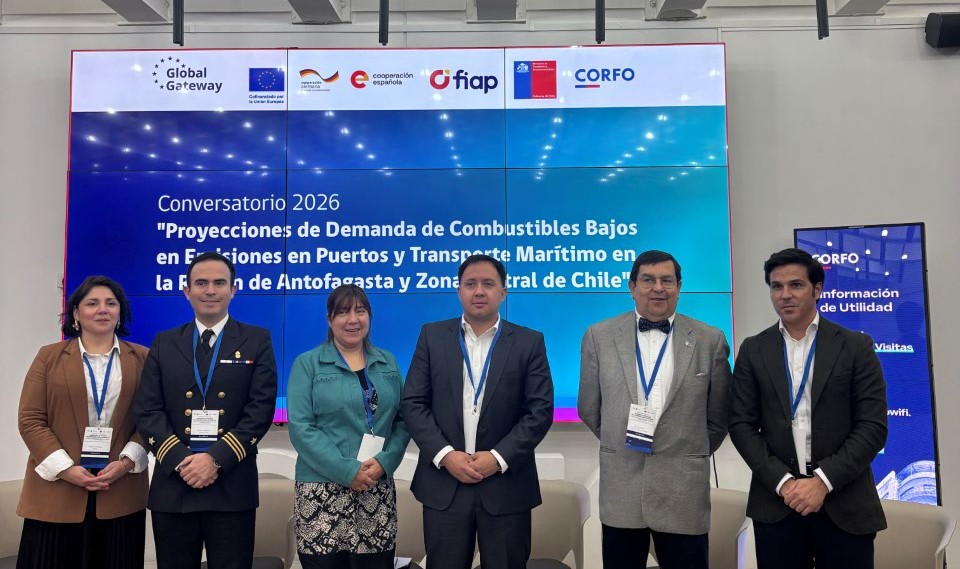
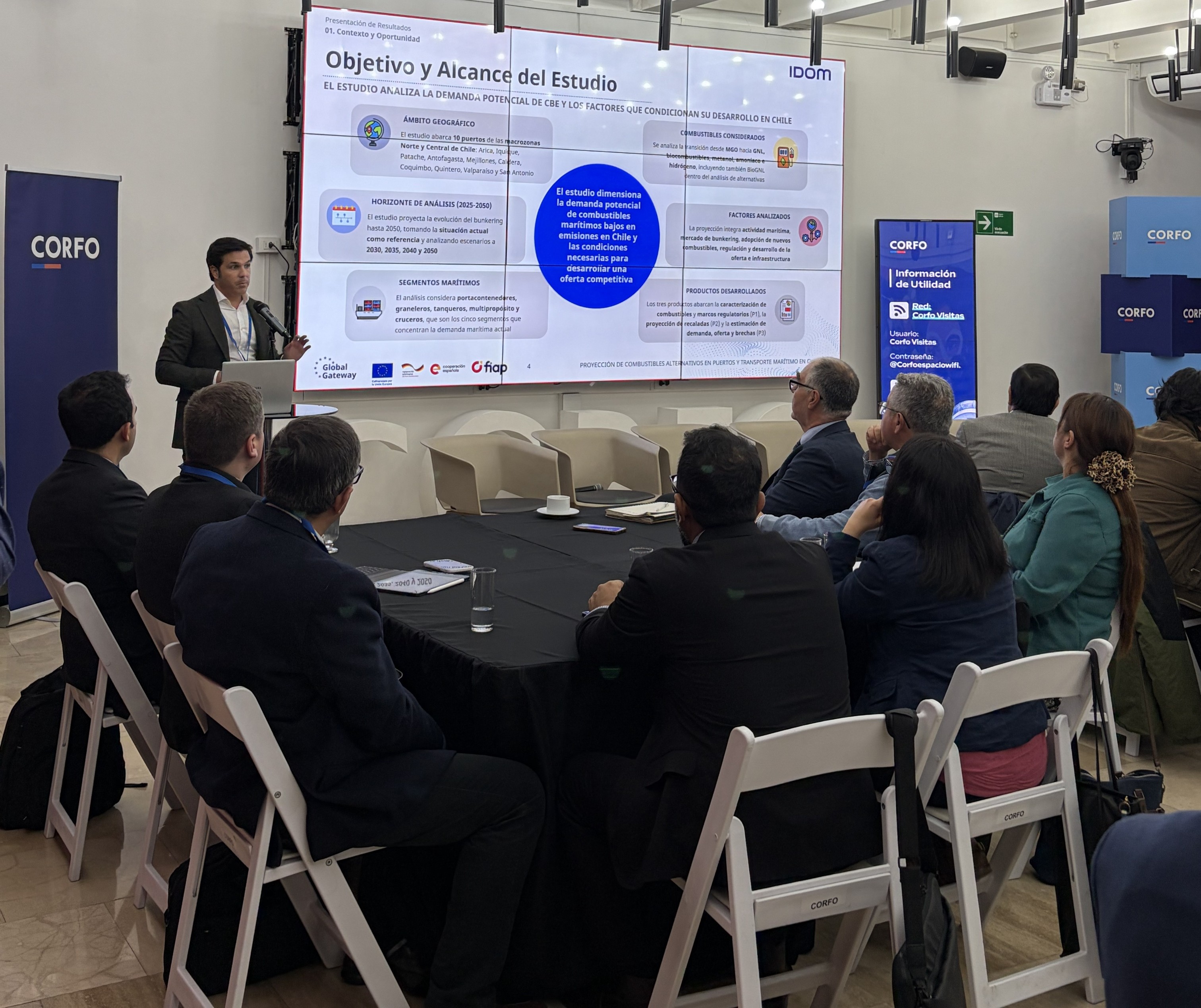
Carlos Martín presented the study’s findings during a roundtable discussion in Santiago that brought together representatives from the maritime, port, energy, and public sectors. The event provided an opportunity to compare the study’s projections with various stakeholders’ perspectives on the market’s development and delve deeper into the main challenges to its implementation.
The event concluded with collaborative working groups and a plenary session aimed at identifying priority actions to advance the development of low-emission marine fuels in Chile. Participants highlighted the need to proceed gradually through pilot projects, leverage existing infrastructure, and work in parallel on regulation, safety, and institutional coordination. They also emphasized the importance of increasing demand and reducing investment risks.