

The new Hautes-Pyrénées Departmental Archives open a new chapter for Tarbes
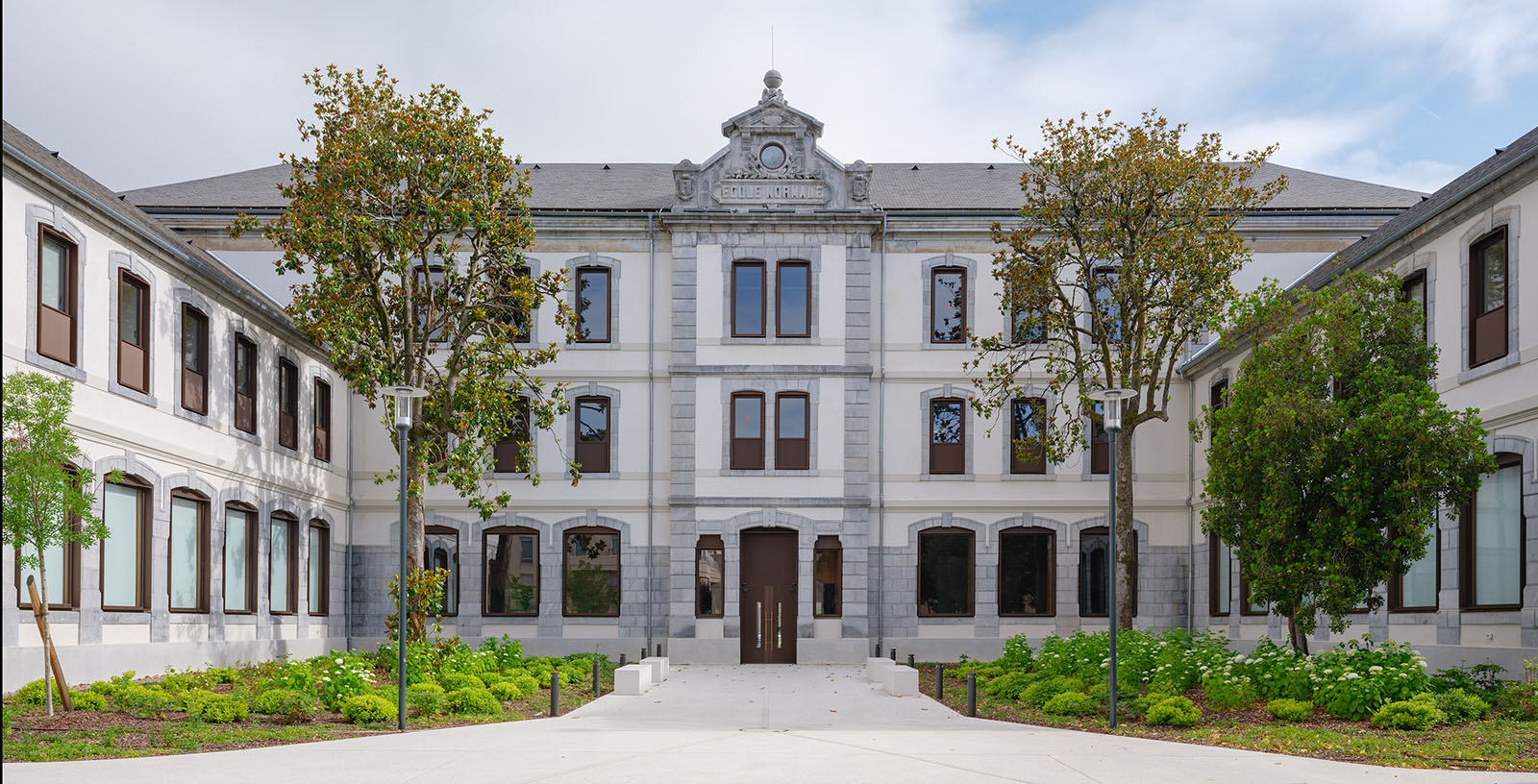
The completion of the main phase of the new Hautes-Pyrénées Departmental Archives in Tarbes, France, marks a major milestone in the restoration of one of the city’s most recognisable buildings and in the creation of a new cultural facility designed to preserve the region’s memory and make it accessible to the public. Designed by IDOM for the Département des Hautes-Pyrénées, the project transforms the former École Normale des Filles into a contemporary Maison de l’Histoire, combining heritage conservation, architectural innovation and urban regeneration.
The intervention is based on a fundamental principle: preserving the identity of a building deeply rooted in the collective memory of Tarbes. IDOM’s proposal retains the central block and the main side wings of the historic building, respecting its urban presence and restoring the elements that have formed part of the city’s collective identity for generations.
At the same time, the project incorporates a new extension designed to house the archival repositories. These spaces require particularly stringent conservation conditions, including demanding structural performance and strict environmental control to ensure the long-term preservation of documentary heritage. The new architecture engages in dialogue with the original building through a geometry inspired by the existing structure and a contemporary reinterpretation of materials such as slate and timber.
Beyond its archival purpose, the project has been conceived as a new public facility for the city. The restored spaces accommodate research rooms, exhibitions, conferences, educational activities and gathering areas open to the public, reinforcing the role of the complex as a cultural and historical outreach centre. The new facilities are capable of preserving more than 25 linear kilometres of archives under optimal conditions while facilitating public access to this heritage.
The project also represents a significant urban transformation. It removes physical barriers, enhances pedestrian connections and creates a new public square organised around the site’s existing trees and historic features. In doing so, the former institutional enclave becomes a permeable and connected urban destination capable of generating activity and strengthening local urban life.
The inauguration of the new Maison de l’Histoire marks the completion of the main phase of an intervention that has restored, expanded and modernised the complex. Work will continue with a second stage focused on completing the external spaces and urban integration measures envisaged in the project, further strengthening the site’s relationship with the city.
With this intervention, Tarbes gains far more than an archive. It gains a new place to preserve its memory, share its heritage and strengthen the connection between history, architecture and contemporary urban life.