


CONSULTING
ASEAN Special Economic Zones, the challenge is no longer attracting investment, but turning it into projects
For years, the competitiveness of special economic zones (SEZs) has depended on tax incentives, land availability, and operating costs. However, the reorganization of global supply chains, “China+1” strategies, the energy transition, and the growing importance of environmental, social, and governance (ESG) criteria are changing location decisions. Having industrial land or regulatory advantages no longer guarantees success. Investors now seek environments that can offer certainty, reduce risks, and accelerate project execution.
ASEAN is one of the clearest examples of this transformation. While global foreign direct investment fell by 11%, the region increased its investment inflows by 8% in 2024, reaching $226 billion. However, this growth has also intensified competition among countries and economic zones vying for the same strategic sectors and investors.
In light of this, IDOM and NurZen developed a new white paper analyzing some of the region’s most prominent SEZs, including the Eastern Economic Corridor (Thailand), VSIP (Vietnam), IMIP (Indonesia), Subic Bay (Philippines), and the Johor-Singapore SEZ. The paper is supplemented by international examples, such as Ulsan (South Korea) and Tanger Med (Morocco). The goal is to identify the capabilities that enable certain zones to transform investment opportunities into actual industrial activity and sustained growth.
From industrial parks to investment platforms
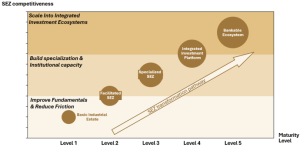
Figure 1: Evolution of the competitive advantage of SEZs by maturity level. Source: IDOM–NurZen
One of the most significant findings of the analysis is that traditional sources of competitiveness are becoming less important.
The most advanced special economic zones (SEZs) no longer compete solely on the basis of infrastructure, incentives, or costs. Rather, their competitive advantage increasingly lies in their ability to connect industry, logistics, talent, innovation, sustainability, and financing within a single ecosystem.
As the model shows, special economic zones (SEZs) evolve from industrial spaces that primarily compete on the basis of land, costs, and incentives into specialized, integrated platforms. At the most advanced levels, competitive advantage is based on providing certainty throughout the investment cycle and having a project ecosystem ready to secure financing.
In other words, the focus has shifted from attracting investment to turning that investment into sustainable, implemented projects.
Specialization: Competing on capabilities, not incentives
The regions that perform best share a common characteristic: a clear vision of what they want to become.
Instead of trying to attract any economic activity, the most successful Special Economic Zones (SEZs) build their value proposition around specific sectors and develop the capabilities needed to establish lasting competitive advantages.
For example, Thailand’s Eastern Economic Corridor specializes in advanced industries such as electric vehicles, electronics, robotics, and aviation. IMIP in Indonesia has developed one of the largest industrial ecosystems focused on nickel processing and battery materials. Meanwhile, VSIP in Vietnam has established a strong position in advanced, export-oriented manufacturing.
This approach enables the development of specialized suppliers, attracts qualified talent, and strengthens value chains that are difficult for other locations to replicate.
Specialization generates greater value when connected to the region’s economic environment. The most competitive clusters do not operate as isolated enclaves. but rather as part of broader networks of suppliers, logistics infrastructure, talent, innovation, and regional markets. In ASEAN, where production chains are spread across different countries, this integration is particularly important.
Execution as a competitive advantage
Specialization alone does not guarantee results.
The benchmark shows that the most competitive regions stand out because they can execute projects efficiently and predictably. Governance, institutional coordination, and the investor experience are key factors in bringing investments to fruition.
For companies, speed is important. However, predictability is often even more valuable. Knowing the procedures, timelines, and decision-makers significantly reduces perceived risk and boosts confidence in the project.
For this reason, leading regions are developing integrated investor support models, inter-institutional coordination mechanisms, and more transparent processes that facilitate business establishment and growth.
Sustainability is no longer just a requirement, it has become a competitive advantage
Another significant change in the region is the increasing importance of sustainability in the value proposition of SEZs.
Clean energy availability, decarbonization plans, and sustainable infrastructure development capacity are no longer merely a response to regulatory requirements. These factors are increasingly influencing location decisions, access to financing, and the international competitiveness of projects.
The analyzed cases demonstrate how sustainability is shifting from an isolated management approach to an integrated part of industrial, energy, and investment strategies in economic zones.
Bankability: The true differentiating factor
Perhaps the most interesting finding of the study is that many economic zones have strategic assets, competitive infrastructure, and ambitious project portfolios, yet continue to struggle to transform these opportunities into actual investments.
The difference often lies in less visible factors, such as the quality of project preparation, solid business models, appropriate risk allocation, clear governance structures, and alignment with the environmental, social, and governance (ESG) criteria demanded by investors and financial institutions.
At this point, bankability becomes a decisive factor.
Bankability is not just an additional dimension of competitiveness; rather, it is the result of the convergence of sectoral positioning, institutional capacity, execution certainty, sustainability, and market access. A region is not fully competitive if it cannot transform its opportunities into bankable projects.
ASEAN starts from a privileged position thanks to its integration into global supply chains, industrial dynamism, and resilience in attracting foreign investment. However, the study shows that these traditional advantages no longer guarantee success on their own.
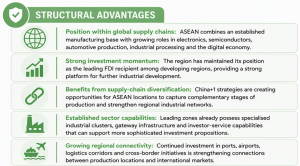
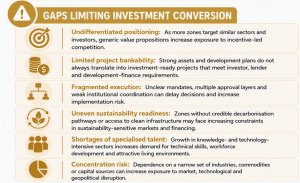
Figure 2: Structural advantages of ASEAN and key gaps that limit its conversion into investment. Source: IDOM–NurZen
The region’s experience offers a lesson that applies far beyond Southeast Asia. In an environment where numerous destinations compete for the same capital, a competitive advantage is not just about attracting investor interest; it’s also about providing the confidence needed to turn that interest into projects that are implemented, financed, and sustainable.
The Special Economic Zones of the future will not compete by offering more incentives. They will compete by demonstrating their ability to execute projects effectively.