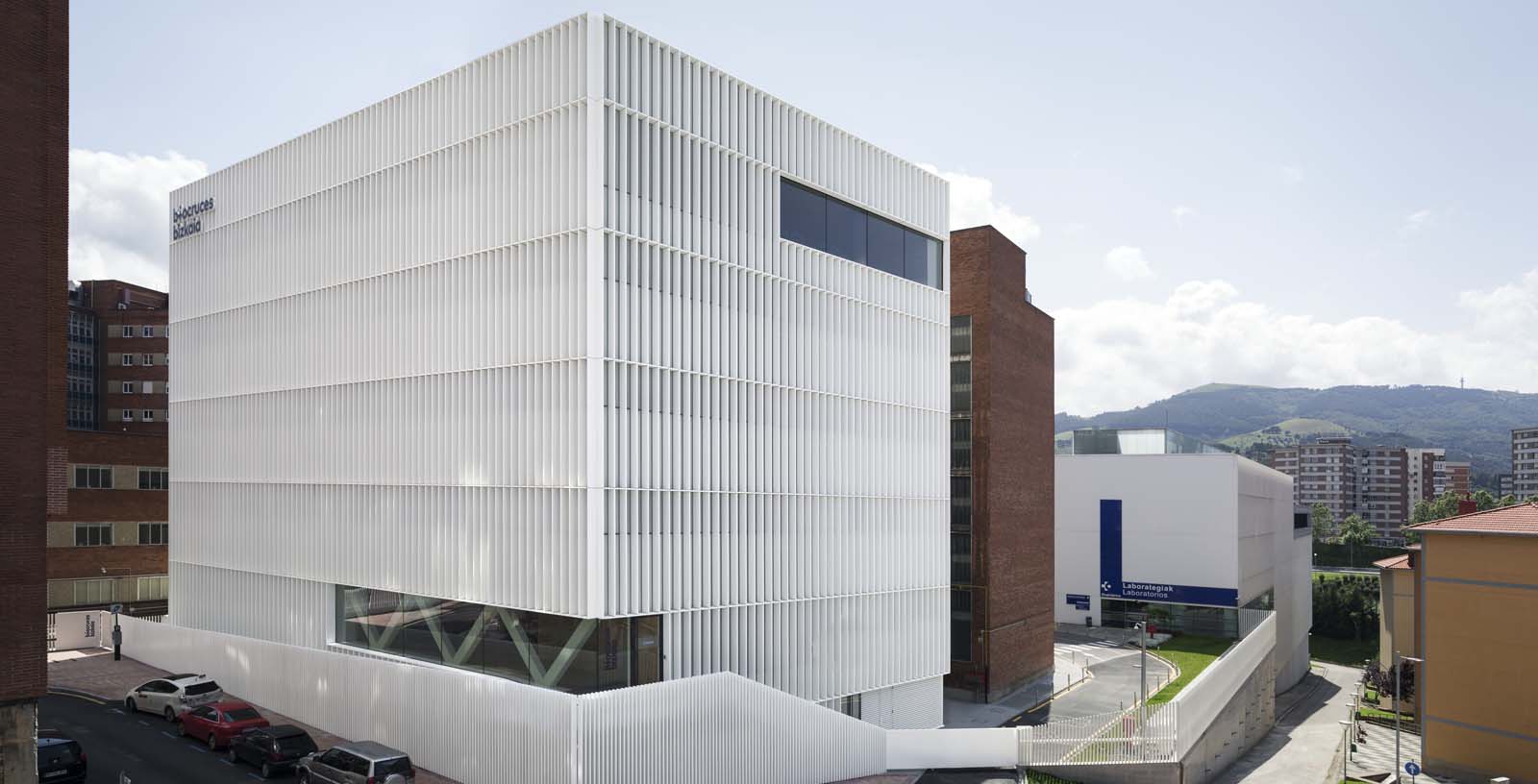


General Services building of Cruces hospital and Biocruces Institute
Spain
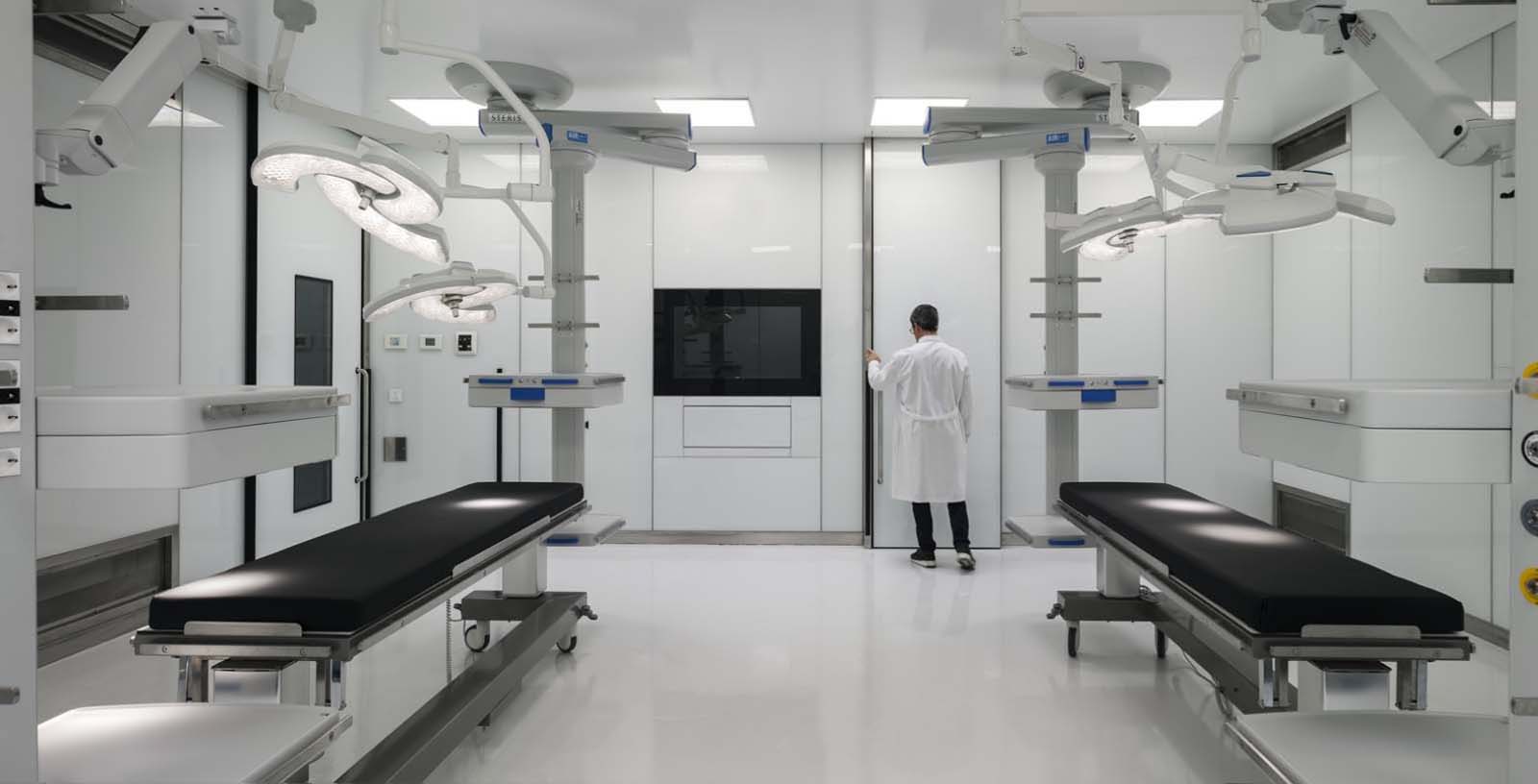
Located in Barakaldo, the new General Services building of Cruces hospital represents both an architectural and functional milestone within the largest healthcare center in the Basque Country. Designed by IDOM, this 10,000 m² facility houses laboratories for genetics, research, microbiology, and pathology, as well as underground parking, consolidating its role as the hospital’s technological and logistical hub.
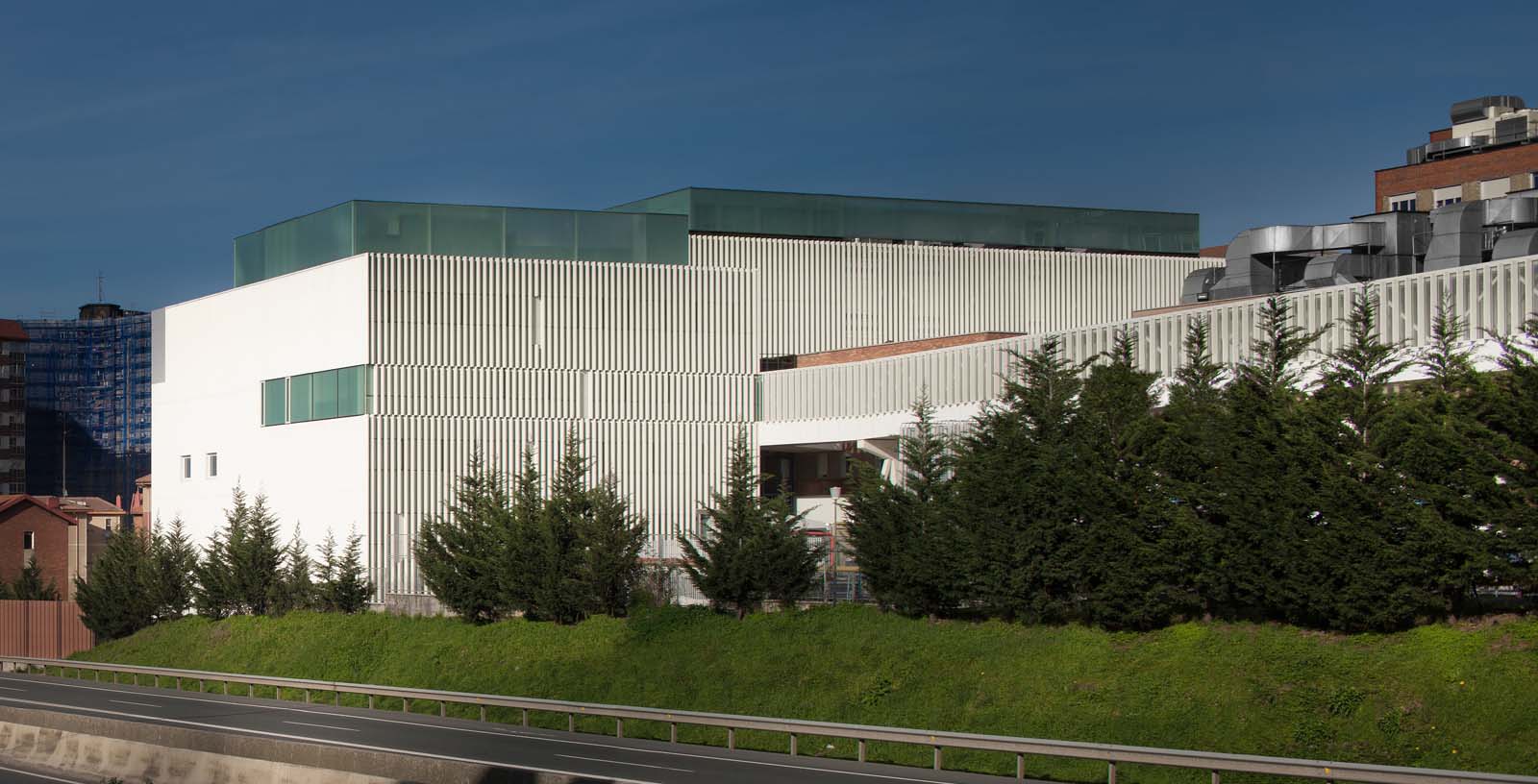
The project is situated on the last available plot within the hospital complex, adjoining an existing building and serving as a transitional element between the hospital and the La Milagrosa neighborhood. Its volume responds to urban planning alignments and the site’s topography, with a 13-meter slope that allows for differentiated access at various levels, optimizing circulation and integration with the surrounding urban fabric.
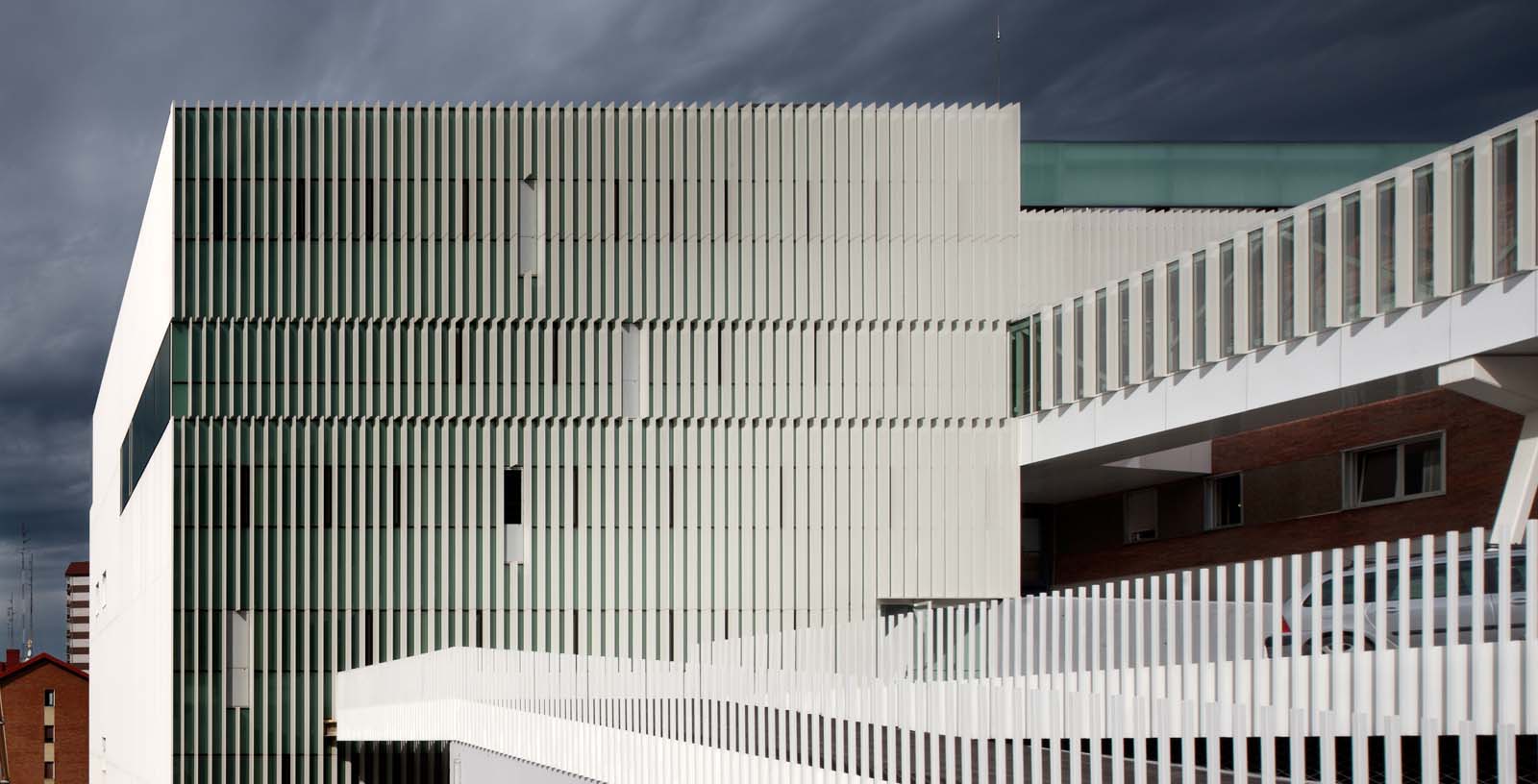
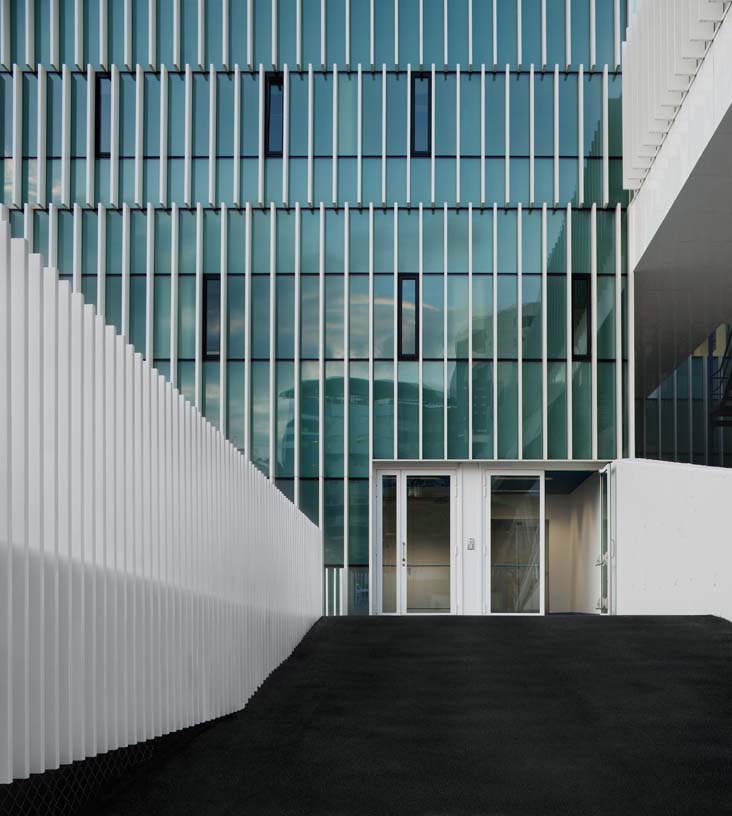
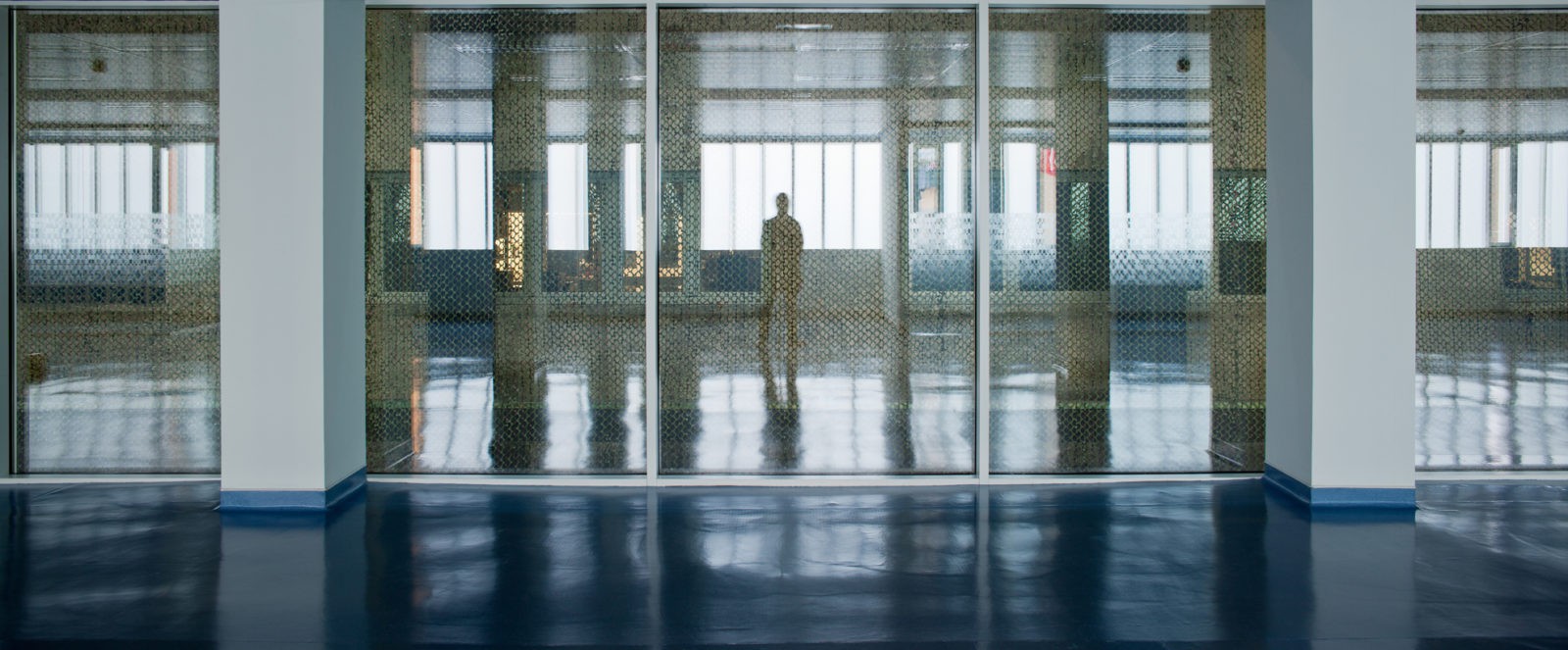
The architectural identity of the General Services building of Cruces hospital is defined by a white, translucent envelope dominated by glass, conveying a clean, high-tech aesthetic that evokes the abstraction of a protein map. Deep vertical louvers on the east and west façades provide effective solar control, while the open-plan floors, with wide spans between columns, offer great flexibility to accommodate future functional changes and evolving technological needs.
The building is organized across seven levels, two of which are dedicated to parking. In addition to the laboratories, it includes complementary services such as a robotic lab, immunology, hematology, the morgue, and a blood extraction area. Its design facilitates internal pedestrian connectivity through the so-called “human pipeline,” linking this building with the rest of the hospital complex and enhancing operational efficiency.
Thanks to its strategic location next to the highway and its functional, forward-thinking design, the building not only serves Cruces Hospital but also supports other nearby medical centers. It stands as a benchmark in contemporary hospital architecture, combining innovation, adaptability, and urban sensitivity.
The new headquarters of the Biocruces Institute is located within the Cruces hospital complex. This newly constructed building is dedicated to housing biomedical research areas and an animal facility, forming a key part of the region’s healthcare and scientific infrastructure.
The building is organized across eight floors, three of which are below ground level. Above ground, the layout is structured into two laboratory blocks—north and south—separated by a central volume that contains shared spaces along the eastern façade and the vertical circulation core along the western façade. This configuration ensures clarity in spatial organization, efficient internal circulation, and functional separation of uses.
Given the scientific nature of the program and the need for adaptability in research environments, the building was conceived with a high degree of flexibility. Modular systems were implemented to allow for future reconfiguration of laboratory spaces, while technical installations were designed with accessibility and scalability in mind. The complexity of the building services—far exceeding that of a conventional laboratory—was a defining factor in the project’s development.
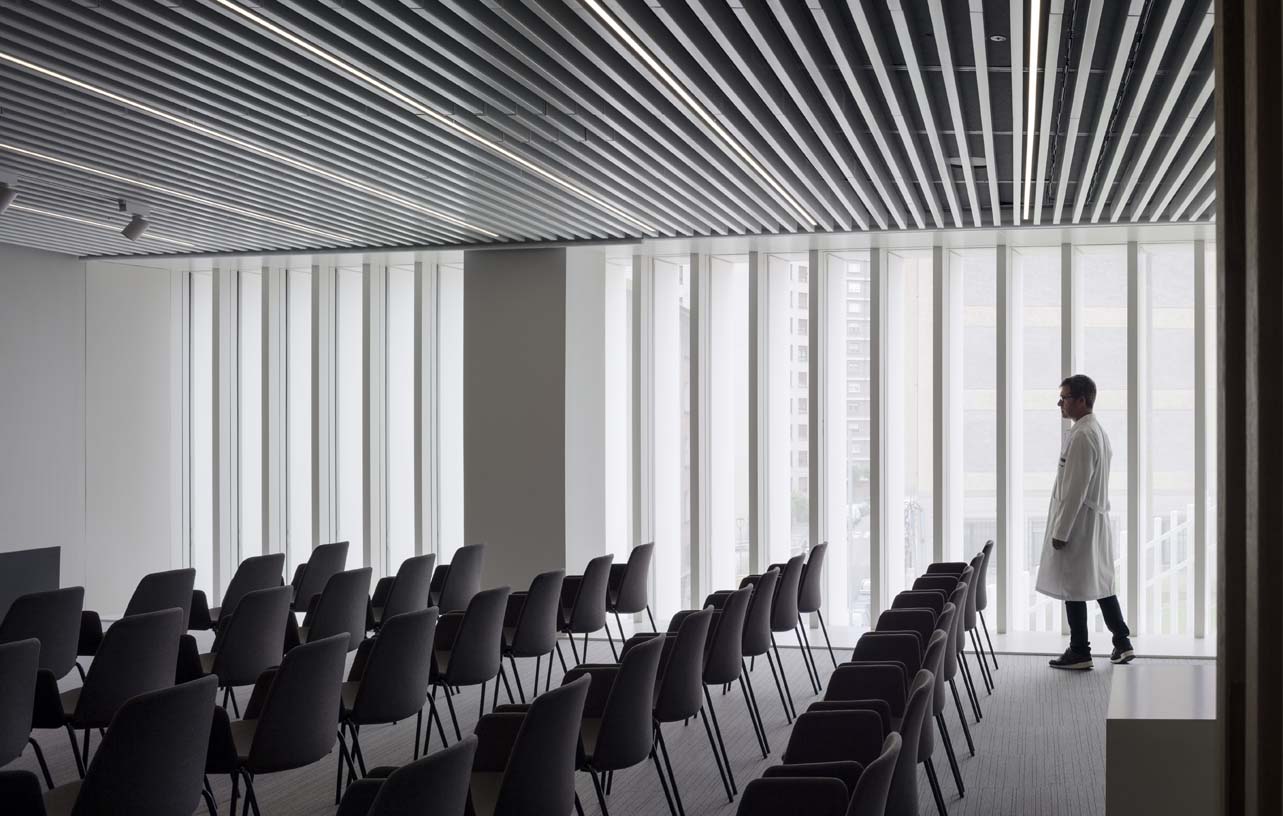
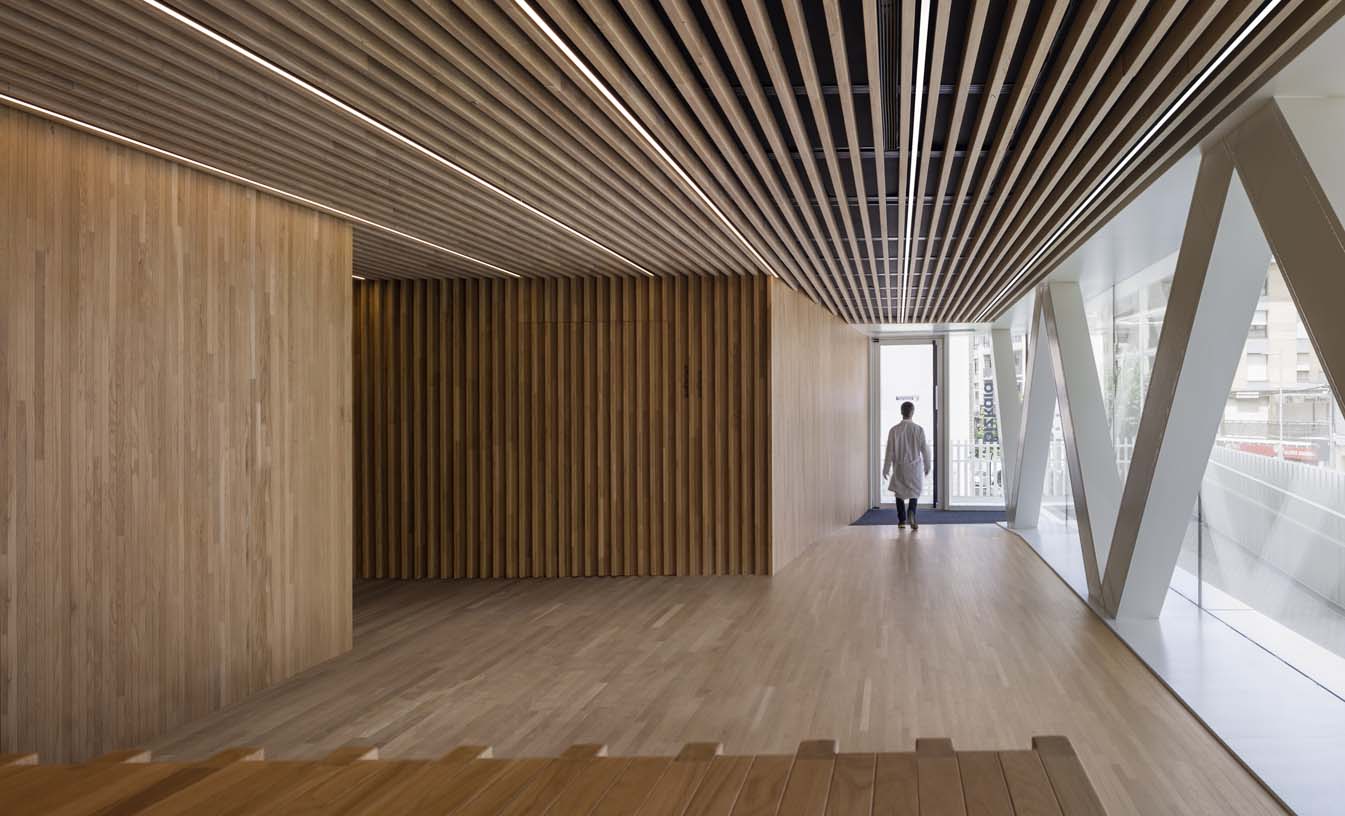
The site posed significant challenges due to its limited dimensions and proximity to neighboring buildings. With no possibility for volumetric variation, the architectural response focused on the façade design. A dense lattice of vertical fins wraps the building, providing solar protection and visual privacy from adjacent structures. This technical skin is interrupted only in key areas such as the main lobby and rest zones, where large windows express the building’s public and social character. The use of white on the façade creates a striking contrast with the surrounding urban fabric, reinforcing the building’s identity.
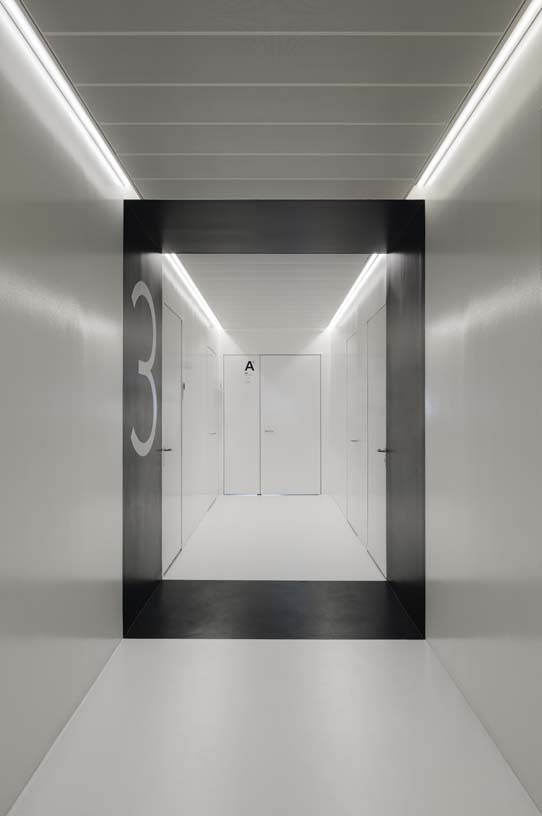
Inside, the design continues the language of clarity and brightness. Light-colored finishes dominate the workspaces, enhancing natural light and creating a calm, focused atmosphere. In more representative areas, wood is introduced to add warmth and texture, while selective use of color aids in wayfinding and user orientation.
The Biocruces Institute stands as a benchmark in research architecture, combining technical rigor, spatial efficiency, and urban sensitivity to support cutting-edge scientific work in a demanding and evolving context.


CLIENT:
Osakidetza / Basque Health Service
SCOPE:
Construction Project
Construction Project
Preliminary Design
Preliminary Design
Works supervision
CONTACT
Gonzalo Carro ( gonzalo.carro@idom.com )