


ENVIRONMENT
Sustainable tourism planning for three protected natural areas in Peru
JULY 2026
Rocío González Ramírez | Linkedin
IDOM has provided support to MINCETUR and SERNANP, with funding from the IDB, in designing strategies, priority projects, and financing mechanisms to strengthen tourism management in three protected natural areas in Peru.
In 2024, Peru’s protected natural areas (PNAs) received 2.5 million visitors, which was a 24% increase compared to 2023. The PNAs generated more than 1.1 billion Peruvian soles in added value for the national economy. However, 78% of this contribution comes from just four PNAs. The rest of the system operates with minimal infrastructure and lacks the financial resources necessary for sustainability. SERNANP estimates the investment gap at S/95 million, and closing the infrastructure deficit entirely would require between S/400 and S/570 million.

The project has defined a tourism planning strategy, a portfolio of priority investments, and new financing mechanisms to promote conservation and sustainable development in Peru’s protected natural areas
A five-phase process
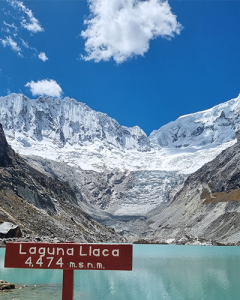
The project was structured into five phases carried out between May 2025 and mid-2026.
In the first phase, the scope of the project was established, and more than 50 key stakeholders, including national institutions, regional governments, municipalities, tour operators, local communities, academia, and civil society, were identified. Additionally, the areas of influence for each protected area were defined through a multiscale analysis.
The second phase produced a comprehensive gap analysis that covered the regulatory framework, financial analysis, governance structures, an inventory of existing infrastructure, environmental, cultural, and community analyses, tourism supply and demand, and the carrying capacity of the three protected areas. At the same time, an international benchmarking study was conducted using 16 reference cases, including Picos de Europa, Torres del Paine, the Galápagos, Tijuca, El Yunque, Cabo Pulmo, and the Great Barrier Reef, which helped identify replicable strategies for planning, governance, financing, and conservation of the tourism landscape.
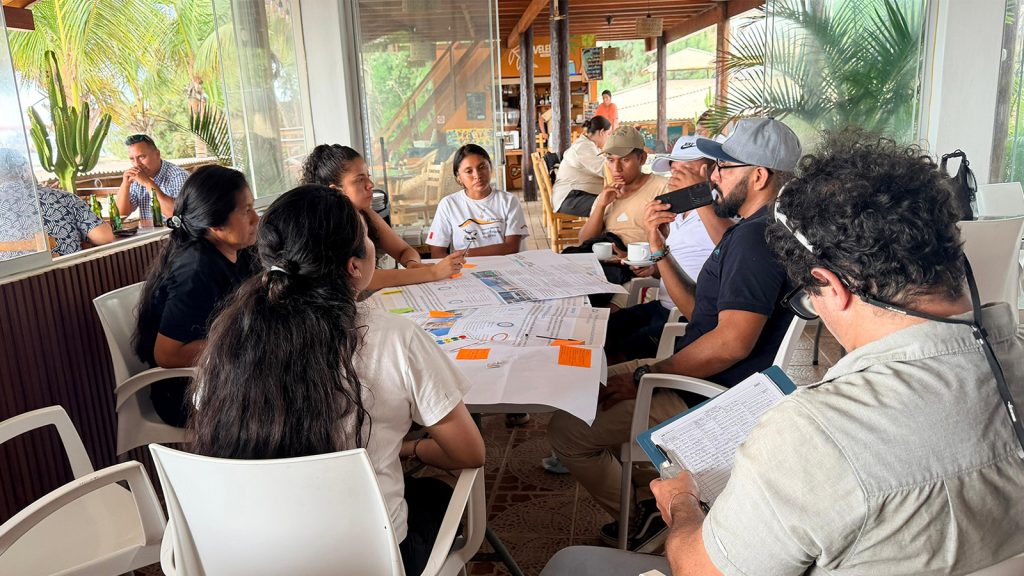
The process has included numerous participatory workshops, reconnaissance tours, and social mapping exercises with tour operators, local communities, artisanal fishermen, regional governments, and the management teams of the protected areas.
Strategy, action plan, and anchor projects
Based on the assessment, the third phase defined the sectoral strategy, including a vision, guidelines, and objectives agreed upon by MINCETUR and SERNANP, and designed an Innovative Tourism Investment Program with a prioritized portfolio of projects. One anchor project per protected area was selected; these projects aim to establish, at strategic locations within each area, a space for managing and monitoring tourism in a way that is compatible with the conservation of the protected areas.
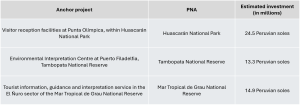
The fourth phase, which is currently being finalized, has consisted of developing investment profiles for each anchor project, including preliminary design studies, visitor flow plans, financial sustainability analyses, and institutional arrangements between MINCETUR and SERNANP for the implementation and operations phases.
Funding for conservation and climate action
 The fifth phase identified a diversified financial architecture for Protected Natural Areas (PNAs) that links existing national mechanisms, such as Sustainable Sovereign Bonds, MERESE, “Works for Taxes” programs, and multipurpose projects, with innovative instruments, including REDD+, carbon markets, competitive grant programs like “Turismo Emprende,” tourism concessions, and international cooperation, including the Green Climate Fund (GCF), the Global Environment Facility (GEF), and the Adaptation Fund. This analysis is based on the idea of transitioning from a model in which conservation is an obligation to a model in which conservation is a priority and an investment opportunity.
Towards a replicable model
The project produces replicable outputs designed for the entire SINANPE: a national methodological guide for planning and managing tourism in protected natural areas (ANPs), a report on lessons learned, and a portfolio of scalable financing models. These results demonstrate the quantifiable and monetizable value of the ecosystem services provided by protected areas, such as water regulation, carbon sequestration, and landscape maintenance. For every sol invested in a protected area, the national economy generates between S/ 5.28 and S/ 12.43 in added value.
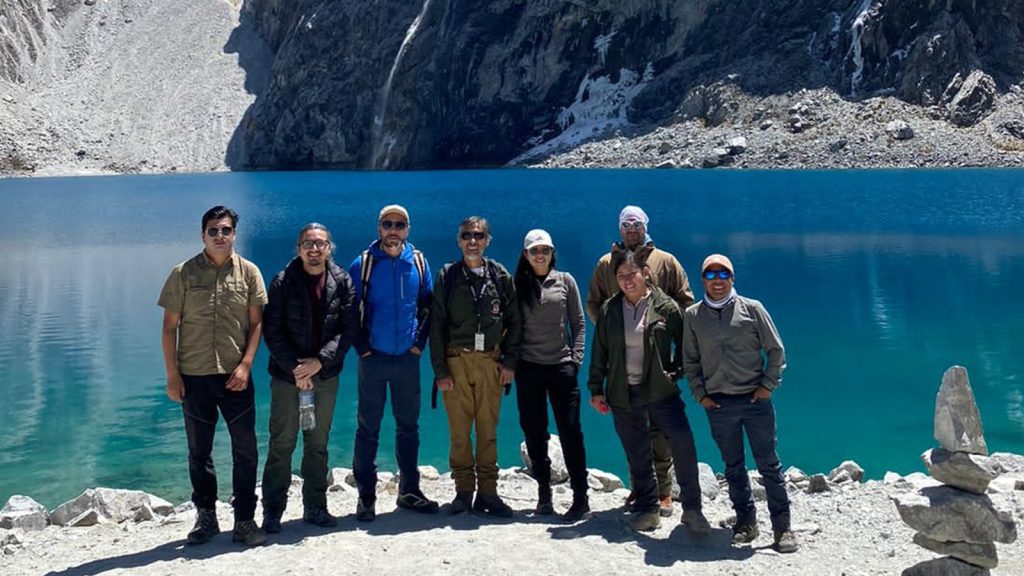
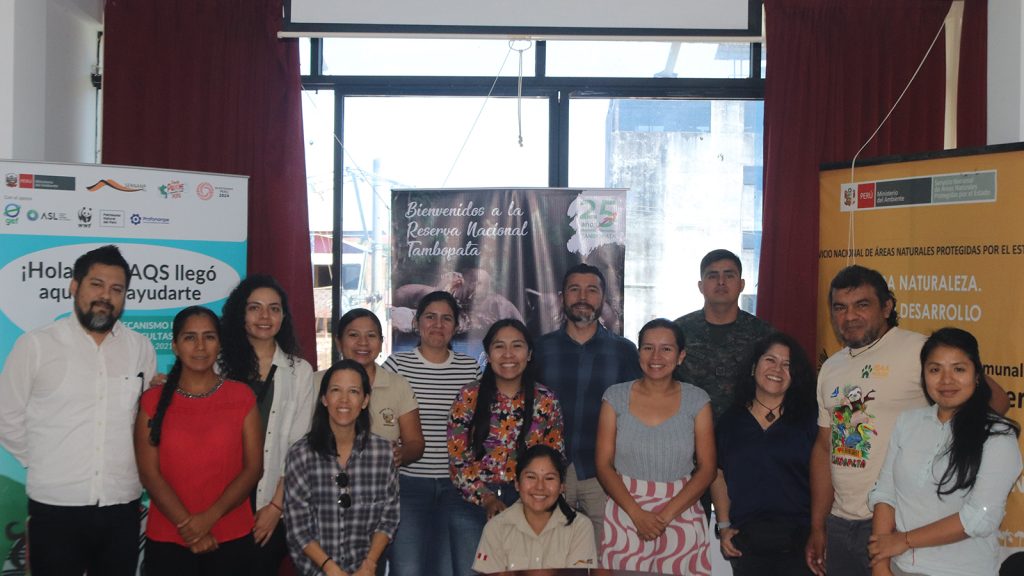
This project is part of a technical cooperation initiative funded by the Inter-American Development Bank (IDB) and implemented by IDOM, in coordination with Peru’s Ministry of Foreign Trade and Tourism (INCETUR) and the National Service of State-Protected Areas (SERNANP), to strengthen tourism planning and management in three priority protected natural areas in Peru: Huascarán National Park, Tambopata National Reserve, and the Mar Tropical de Grau National Reserve.